Documented by guest contributor and Director Chris Deacon.
“Sometimes friends let each other down,” she says, highlighting the unavoidable conflicting commitments that come with maturity. “It can no longer be what it was, and you have to kind of figure your way forward.”
While Henry never misses an opportunity to honour Black history, she’s clear about what meaningful recognition truly involves. “The most effective ways we can honour and respect the contributions of Black people are through policy and how we show up in our communities.”
And now, DGC Ontario Director Sasha Leigh Henry, in her own words:
Opening Shot
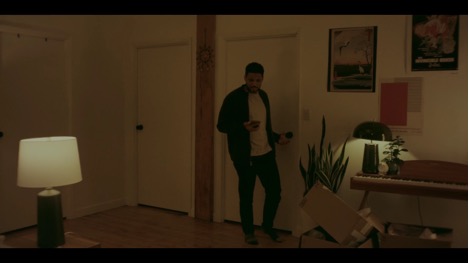
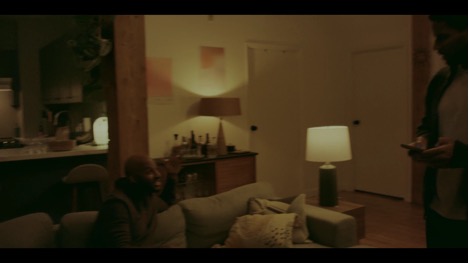

We shot Dinner with Friends in 9 days, so my DP, Grant Cooper, and I decided on a shooting style that would work within the limited timeframe. Throughout the film, we wanted to ensure the audience feels the bond between the group. We achieved this by leaning into natural light and a camera we dubbed “the 9th friend of the group”. In this first shot, we maximize the moving camera. The wide shot of Tristan at the door becomes a two-shot for him and Malachi (sitting on the couch), ending on a two-shot of Malachi and Paul, standing behind him and Kat. In one move, we reveal who’s arrived and quickly establish that the kids are in the one bedroom, justifying why all conversations happen in the open space.
This scene begins with Tristan checking on the kids—a telling sign of how the group dynamics have shifted since their last dinner. Tristan is hardly the most competent adult in the group, so his being our “anchor” introduces a bit of unease and indicates that this dinner will be different from the others.
Joy Arrives
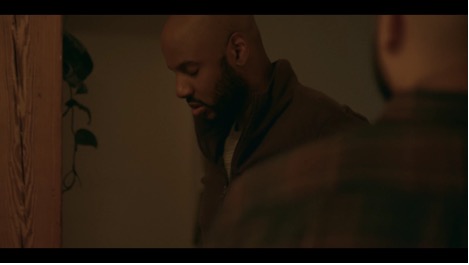
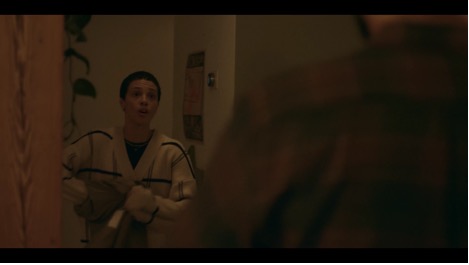
This is a good example of being economical with our shots while still telling the story. Here, Malachi exiting the frame becomes Joy’s arrival a beat later. At this point in the film, they are at odds and not on the same page. It also highlights the group’s layered feeling—another friend can always fill a spot when someone has to step out.
Stacked Frames
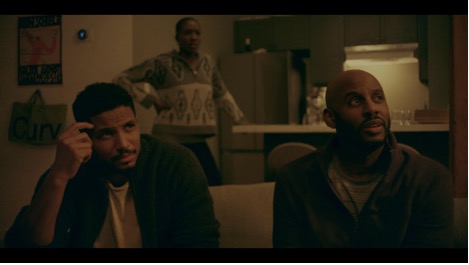
Unlike the other two main dinner locations, Paul lives in a condo with one central eat/living area, which allows for this visual pressure cooker. Several frames have other characters stacked behind them or filling the frame around them. We leaned into the idea that at a party, you don’t get a clear, perfect view of everyone who has the floor (think Mia Farrow in the opening scene of Husbands and Wives, delivering some of her best lines off-screen from the bedroom at the dinner she’s hosting). Our characters are hearing everything in real time. Stacking frames lets us stay in one spot to capture both the foreground and background, then move on knowing we have something for each character. If we felt it was warranted, we’d sometimes pick up and go in closer, but moved on if we felt we had it.
Joy altered state, character frame
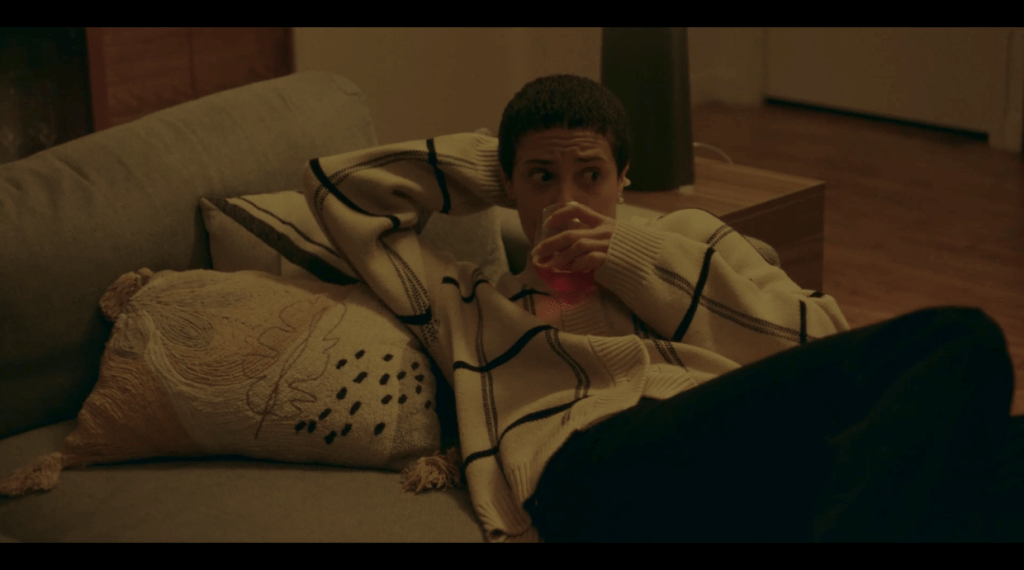
We follow Joy with singles as much as possible throughout this dinner. As mentioned, this is a dinner where things are turned on their head. Here, Joy is reclined, drinking, and casual in a way we’ve never seen her before. When the dinner goes south—triggered by Joy’s reaction to some unexpected news— it’s a blow-up for everyone. Tracking her in a single shot as often as possible was key for the scene, so we can sense when the moment shifts.
The storm is brewing

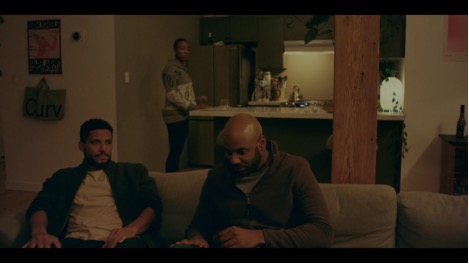
Here’s another example of how we used moving shots to knock off multiple shots from our list. A single of Joy turns into a two-shot of her and Malachi, ending as a three-shot of Malachi, Tristan, and Kat. The blocking foreshadows how the scene will eventually feel for Joy, as if she’s alone in the group, with everyone against her.
Pressure Cooker heats up

Just as tensions begin to simmer between Malachi and Joy, new characters enter the scene, and the energy and tension start to boil over. This location was ideal for containing everyone in a way that felt slightly cramped. It creates great frames like the above, with Malachi and Tristan reacting to the previous moment in the foreground while Kat and Paul attend to the new arrivals. There’s a lot of information in one frame, and lots to see on a second and third watch. I love movies that reveal new details with each viewing. The beam in the middle of the apartment was also fantastic because it forced the frames within the frame, making everyone feel boxed in.
Layered frame example, multiple things going on, just like a party
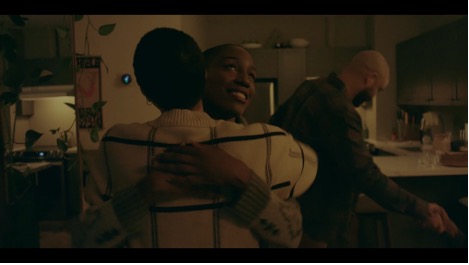
With Josh and Ty as the final arrivals, the pot starts to boil over, and the competing energies of happy announcements and traffic frustration start to brush up against one another. I love the layers of people and movement in this frame, with Joy and Kat celebrating in the foreground and Paul and Tristan shaking hands behind them.
Wooden beam to frame and block
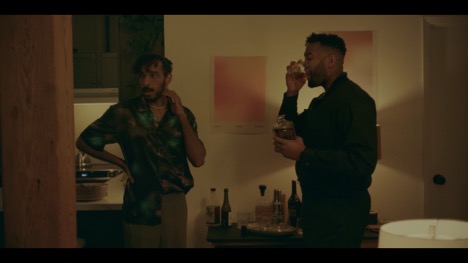

Here, again, the beam sections off Ty and Josh, who are not nearly as happy about the baby news as everyone else. The beam essentially let us create a visual side room where there really wasn’t one.
Our second single
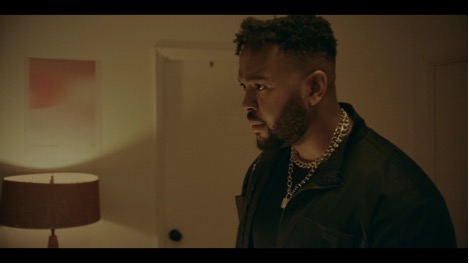
Josh was the other person we prioritized tracking as a single to some degree. The blow-up is a fuse lit between him and Joy, our polar opposite, headstrong POVs throughout the film. This dinner is a rollercoaster, with this shot becoming yet another turning point. We uplit the lamp to frame Josh as a villain. Again, we use the single to underscore ‘me vs. them’. Josh makes a pretty off-colour remark about all their kids, so I blocked it to highlight and find humour in the transition from this stark shot to:
Reaction Shots x 2
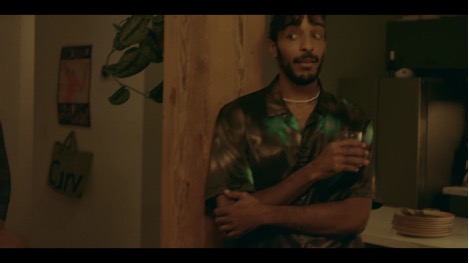

A swing round to these reactions, with Ty by the beam, straddling the line between his partner Josh and the group and the rest of the group’s reaction to what he just said. It’s a great moment I love because it lets the audience know that, while inappropriate and eliciting a strong reaction, it’s a bit of a comedic moment nonetheless.
Joy becomes a focal point again

Here, Joy becomes a focal point again as we move along the couch and see the group sitting in their post-dinner, shoot-the-shit positions. It’s a come-down from Josh’s outburst that is about to pick up again when he realizes that no one remembers his birthday. We want to clock Joy here so we know she’s still in her loose, relaxed vibe, and she’s continuing to drink.
Favourite ensemble shot: get the comfortability, levels, and negative space to play with
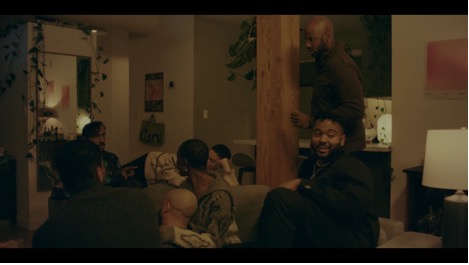
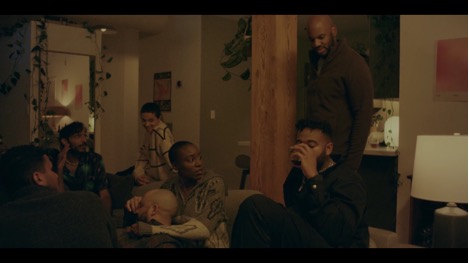
These are some of my favourite frames from the whole movie. I love the levels and the distance between Joy and Josh. It forces the group to ping pong between their reactions as they rib each other, and Josh twists the knife on his comment. There’s also a nice pocket in the distance near the wall that works well for later, when we stay with Joy from the same position. This is the beauty of this one-room condo container: you can literally feel the awkwardness and tension rise as you clock each person’s shift in body language and subtle glances. When we swap sizes and move in closer, we track these reactions specifically to build the scene’s tension. It’s not a grand revelation that triggers this rift, but a small one that we know is a big deal based on Joy’s character until now, but also based on the reactions we get from everyone else once the secret’s out, like this one of Kat:

Punch in from ensemble, focal point for Joy

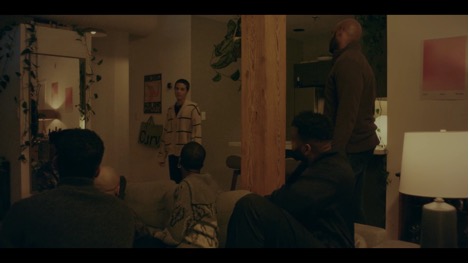
Here, we see the empty pocket from the wider frame being used in a way that doesn’t require the camera to reset or reposition. From the couch to now, standing, it becomes the perfect spot for us to focus on Joy, who is having the strongest reaction to what’s been shared and is tipsy and vocal in a way we’ve never really seen before.
Shots that underscore intimacy

Moments like these show how we built intimacy and that immersive feeling for the viewer. This is after Joy stalks off, and Tristan has gone after her. Josh keeps going, and we get this moment where Kat tries to rein him in. There’s so much going on around them that this moment feels like a sidebar within the bigger scene—like a friend trying to stop you from making a bad choice at a party. It’s quiet but impactful, contrasting how the earlier off-colour remark from Josh was handled versus this one, with everyone feeling he’s crossed a line. The main message of the scene is still about Joy, but this frame feels like when you check in on everyone still standing after a blow-up on a night out.
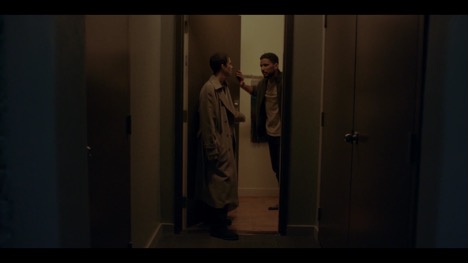
The final shot of the scene shows the walls seeming to push Tristan and Joy together. Throughout the film, there’s been an unspoken energy between these two that they never address. We never even really see them exchange more than a hello, so this is the first time we see them one-on-one. The dark hallway, leaving the apartment with all the friends, with only the light, felt fitting. This dinner definitely leads to our dark night of the soul for the group of friends, and narrows the ensemble to these two, with the door closing and eventually leaving Joy in darkness, as the final shot suggests that there might be no coming back from this night for her.