In partnership with DGC Ontario, Dark Slope, and The Creative School at Toronto Metropolitan University, this hands-on crash course highlighted crucial takeaways for filmmakers and creatives looking to expand their understanding of Virtual Production. Participants were guided through the process of creating 3D virtual environments within Unreal Engine 5.4 at TMU’s Red Bull Gaming Hub on Day 1. Then, they utilized those virtual assets in combination with a physical, virtual production stage within Dark Slope’s new state-of-the-art 35,000 sq ft facility on Day 2.
“Workshops like this are essential to equip our filmmakers with the knowledge and hands-on experience needed to navigate the rapidly evolving world of Virtual Production,” said DGC Ontario Executive Director Victoria Harding. “Our organization has partnered with TMU and Dark Slope because we recognize the value of collaborating with leaders driving training in this exciting new field of technology, and we proudly represent a Membership motivated to embrace innovation in film and television production.”
Virtual production is revolutionizing the way films are made, and it’s crucial for both designers and directors to understand its creative and technical possibilities,” says workshop attendee and DGC Ontario Set Designer James Usas. “Training like this empowers filmmakers to approach these tools with confidence, enabling them to make informed decisions on set and push the boundaries of storytelling.”
Understanding the Ecosystem: How It All Works Together
During the workshop, Dark Slope illustrated how their studio’s integration of ROE LED Panels, Brompton Video Processors, Unreal Engine 5.4, Optitrack Motion Capture, and Pixera helps to maximize the benefits of creating story content using Virtual Production, ensuring smoother production pipelines and avoiding costly bottlenecks. VP encourages a more iterative, nonlinear, and collaborative process, giving creatives a means to visualize worlds conceptually before they are physically built.
“Virtual Production is transforming the industry, but creators need the right knowledge and hands-on experience to fully leverage it,” shares Justin Cathcart, Dark Slope’s Head of Virtual Production. “That’s why we partnered on this program—to help elevate filmmakers by providing practical exposure to the tools and workflows that are shaping the future of production. At Dark Slope, we believe Virtual Production works best when creators have access to both high-quality tools and a knowledgeable team. By combining our studio resources with hands-on support, we help productions make the most of what this technology can offer.”

Evolving Collaboration With Virtual Production
Understanding how Directors, Production Designers, and Art Directors interact with the virtual production technology is critical, especially considering how their workflows impact previsualization and asset creation. Early collaboration between Virtual Production teams and traditional crews is essential. “The Creative School at TMU is committed to preparing the next generation of filmmakers for the future of content creation. Virtual Production is no longer a niche—it’s a fundamental shift in how stories are brought to life,” says Michael Carter, Director of Special Projects at TMU’s The Creative School.
“It’s essential for Directors to understand the strengths and limitations of this technology,” says DGC Ontario Director Member Ivan Madeira, who attended the workshop. “Virtual Production challenges us to think bigger while also recognizing the technical processes involved. Knowing what to look for, who to collaborate with, and respecting the workflow behind these tools makes us better Directors and stronger creative partners.”
What’s Feasible—and What’s Not
While Virtual Production unlocks powerful tools, it’s not always a necessary solution for every scene – in some cases, a practical set may be all that is needed. However, set extensions can also be added to virtual environments to spark even more creative opportunities.
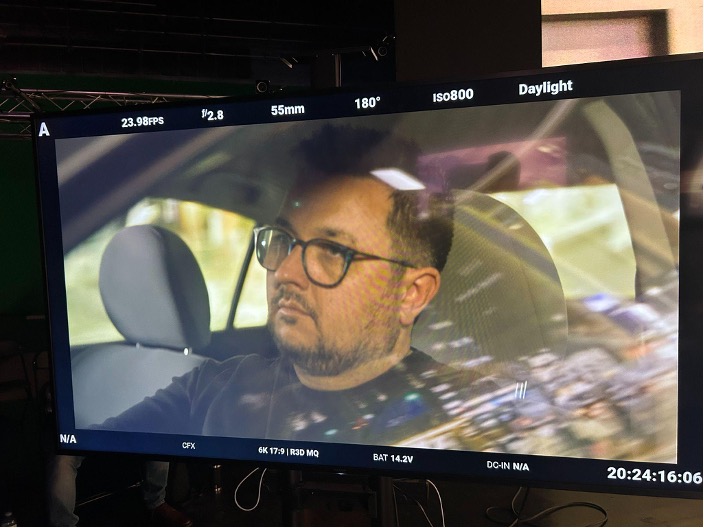
“Like many, I’ve been interested in learning about Virtual Production for some time: What it can and can’t do; what its current limitations are; what the practical workflow is like; and how its current limitations might be creatively circumvented,” says 1st Assistant Director and workshop participant Dave Bene. “The hands-on workshop at Dark Slope presented participants with useful essential information and then, crucially, gave us plenty of time to experiment with the space ourselves, working with foreground set pieces and an actual vehicle.”
“As an AD and VFX person, this is the future. Having a working knowledge of this technology is important to us all,” adds DGC Ontario 3rd Assistant Director and participant Paul Dudar. “And it’s better to get a grasp of it now than find yourself learning its limitations on the day.”
The Hands-On Takeaway: Seeing Is Believing
The most effective way to understand Virtual Production is through direct engagement. Participants experienced magic moments such as how digital and physical sets blend effectively and live changes in lighting and set depth for greater realism. “This was particularly valuable,” says Director Ivan Madeira, “as it allowed me to put theory into practice in a real-world setting and experiment without having to worry about making my day.”
Preparing for The Evolution of Production
As more productions adopt Virtual Production, filmmakers must educate themselves on its strengths and limits. Investing time in not only learning these tools but also using them effectively and with a full understanding of the technology’s strengths and limitations will be crucial for staying ahead in the evolving landscape of filmmaking. Embracing the benefits of Virtual Production technology requires strategic planning, early collaboration, and a clear understanding of the many creative possibilities that VP unlocks.
Join The Creative School Pro intensive workshops to gain in-demand skills that are sought after in the job market and trending within the industry.
To learn more about the DGC Ontario Members who are experts at harnessing this technology and how they’ve used it to develop groundbreaking creative worlds, check out our other Virtual Production articles on The Wider Lens:
Star Trek Discovery: Unleashing Limitless Creativity With Virtual Production
Wider Lens Podcast Episode 4: Fix it in Prep: Previsualizing with Virtual Production
DGC’s Virtual Production Workshop: Event Recap