The Wider Lens sat down with both Annie and Sharon to talk about what it means to receive this recognition at this moment in their careers, how community, passion, determination and mentorship have shaped their paths, the importance of making room at the table for a range of backgrounds and viewpoints, and what they hope to open up for the storytellers behind them.
Annie Bradley, 2025 WIFT Crystal Award for Creative Excellence
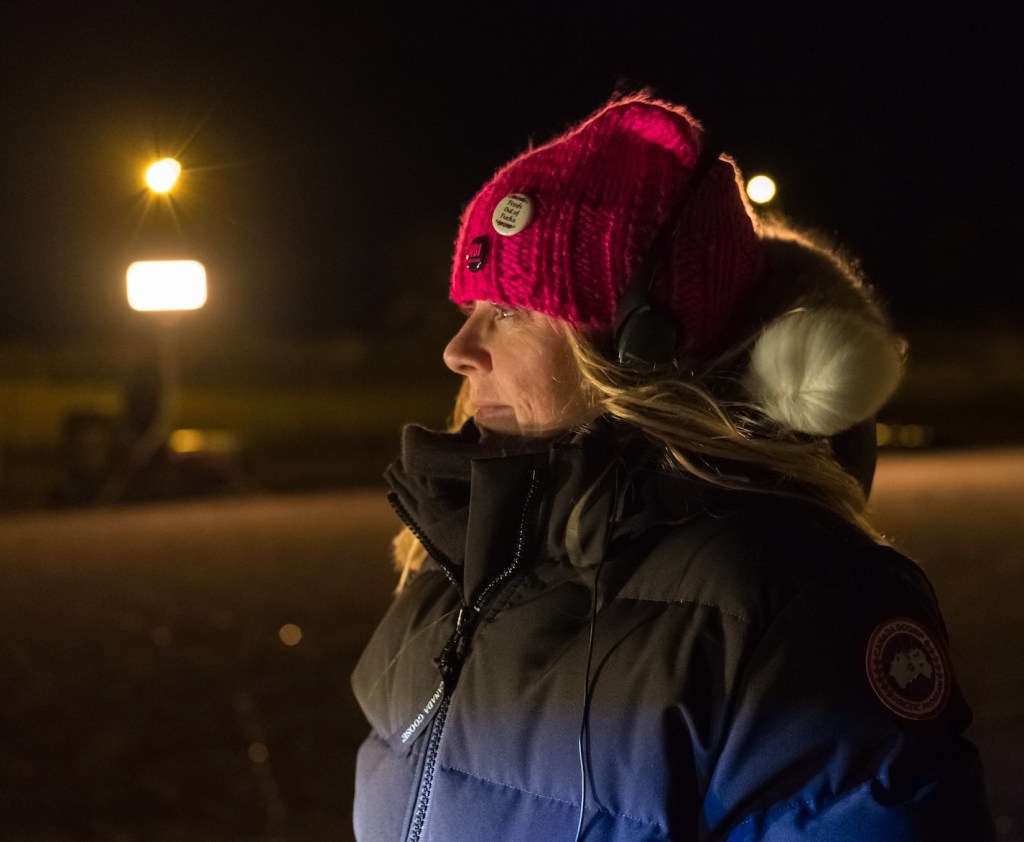
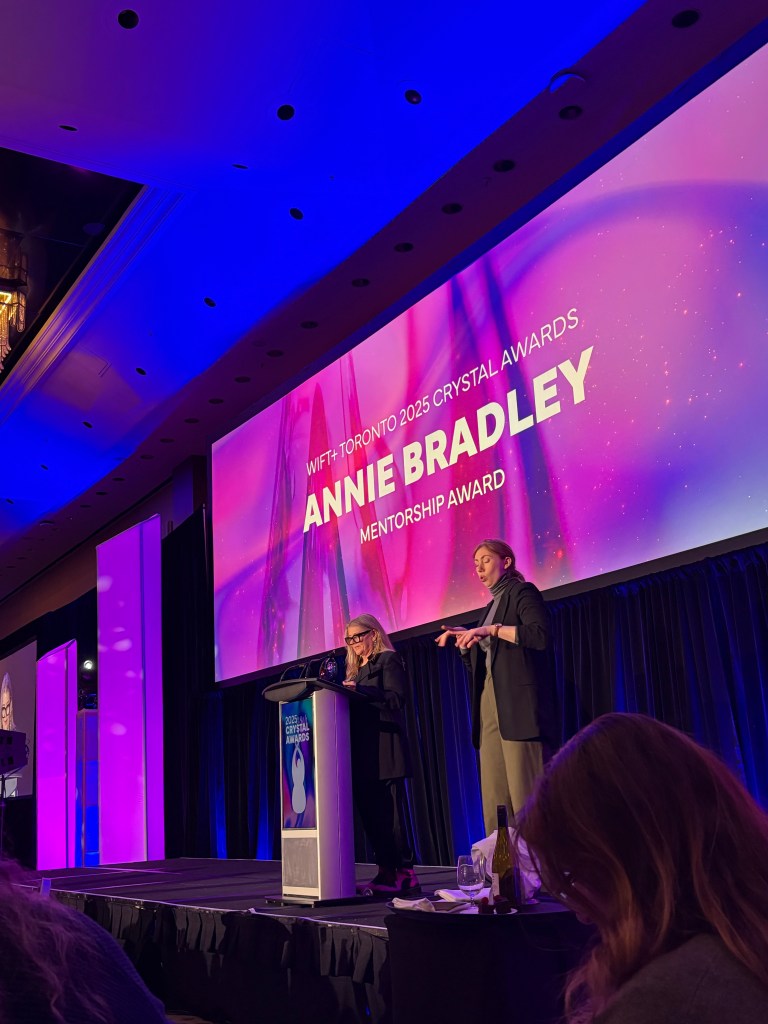
How did you find out you had won the WIFT Mentorship Award, and what did it mean to you at this point in your career?
Annie Bradley: A number of my friends got together behind my back and reached out to people to write letters, and surprised me with the whole thing. It was a really beautiful gesture from a community I’m part of.
I think a lot of people do what they do not because they’re looking for acknowledgement, but because their purpose is to give back to their community. Being honoured by Women in Film and Television is a huge moment. It was emotional to know that people saw me in a certain way, because sometimes we don’t see ourselves in that way.
It was also humbling because it meant my work mattered to others. We don’t really think about how important mentorship is and the different kinds of ways you can mentor. It can be as simple as acknowledging somebody at an event when they look lost in the room, or giving them advice, or hopping on a call to talk through a project.
When you get awards like this, like the DGC Awards, it’s peer-to-peer. That is about your peers saying, “Here is an award for excellence, for craft.” And I think mentorship is a craft. Mentorship is a practice. It was lovely to be acknowledged by my peers.
Why is it important to you to advocate for women of a certain age and for people who come to directing later in life?
Annie: We function in a business obsessed with the new and the next. What I want to do is try to reframe the definition of “new and next.”
For most people, the word young is associated with that. A “young voice” could also be a woman of a certain age who perhaps took a circuitous route to becoming a filmmaker. This is an industry obsessed with youth, but it’s not just the entertainment business — it’s the corporate world, finance, and more.
A lot of women subjugate their dreams. They don’t usually say, “Oh, I’m going to forego everything and follow my dream.” A lot of women, for a number of different reasons, do other things in the first half of their lives. Some of them have families or other careers. Coming to your dream a bit later in life adds richness, quality, experience, nuance, emotional resilience, and intellectualism to your work. It strengthens that new voice.
It’s how I feel about socioeconomic equity in storytelling as well. We can’t just have stories of people who can afford to be Directors. It is our job as mentors to recognize that diversity encompasses socioeconomic strata, genders, races, sexualities, and ages. Sometimes we focus only on a few, and we need to broaden the spectrum of who we’re encouraging to come into the tent.
It’s really important that we don’t ignore that the next greatest success could come from somebody we think is least likely to deliver it. Being a woman of a certain age, I have great respect for anybody who is reinventing themselves with courage and bravery, especially when there isn’t always a support system for it. That requires even more bravery and more courage. I think it’s my job to do whatever I can to encourage and lend whatever words of wisdom or encouragement I can give to that group of women.
How do you define mentorship? What does it actually look like in practice?
Annie:. My definition of mentorship might differ from someone else’s. I believe that mentorship is a verb. I believe that it’s a muscle, and I believe that it’s practice.
It can be as simple as giving words of encouragement when someone is celebrating a victory on social media or acknowledging the win. Women don’t get enough acknowledgement for the win. For me, that’s one really beautiful, simple thing you can do, and it takes 30 seconds.
It’s showing up when people ask you and when you have the time. Mentorship also requires the ability to say, “No, I can’t at this time, but this is what I can offer.”
Whenever you are sitting on a panel, it means talking about your experience and your failures. By talking about your failures, they see that you picked yourself up and went back at it. They need to see the road ahead.
Mentorship should be about authenticity. It should be about discussing the challenges that they’re going to face. It should be about acknowledging the patriarchy, the gatekeepers, the funding limitations, and acknowledging that it is a really difficult time for women in film and television. We made a lot of strides, and now we are unfortunately rolling back at a rapid pace.

You’re currently wrapping up your last term as the Board Chair of DGC Ontario after serving for over five years. What did that experience teach you about your community and mentorship?
Annie: My mom made sure to teach me something: if you don’t like something, do the work and change it. To fix the problem, you have to be part of the solution.
If I wanted to move the culture of the Guild into a more equitable, transparent, inclusive space — if I wanted to see our Directors working on bigger projects, our Editors cutting bigger shows, our Production Designers being acknowledged around the world — I had to take that on, on my downtime. I had to be part of that solution.
You have to run for election, you have to show up, and you have to do the work. It’s not easy work, but it is incredibly rewarding work. To have the opportunity to shape something like that once in a lifetime, to make more opportunities — that is an astonishing thing to be able to do.
I come from a family that did a lot of community service. It was ingrained in me very early on. You don’t have to take over the Guild, you don’t have to be Chair for six years, but you can show up and help somebody out, or return a phone call, or send an email.
I think that great progress is a series of tiny, magical moments of empathy, and that’s mentorship. To me, mentorship is empathy. It’s understanding that every single person, no matter how confident they appear, struggles. They have imposter syndrome, they have moments of doubt, they have feelings of loss and rejection. Whatever you can do as a human being to a fellow human being to make their day a little easier, that comes back tenfold.
What advice would you give to someone who feels alone and is struggling to find their filmmaking community?
Annie: Women look for the cracks in the wall, because, as they say, that’s where the light comes through. We find those cracks, and we inhabit those cracks. The more women that come into the crack, the greater the pressure becomes, and the crack opens, letting more light in.
There are so many incredible organizations when you are first trying to find your feet or struggling to find a way in. I started with Women in the Director’s Chair. That was the first step in my journey from 1st AD to becoming a full-time Director, and it opened me up to the possibilities and gave me the confidence.
Did I become a Director right after that? Hell no. It was a long and circuitous route. But it was that community of women that put me on the road, many of whom I am still in touch with and friends with today. Then there’s the extraordinary community of women at Women in Film and Television. They cost a very reasonable amount of money to join, and you have an immediate community where you can take courses or volunteer your time. When I was starting out as a filmmaker, I volunteered at TIFF. It was an amazing couple of years – who I met, what I did, the movies I saw, the community I built. Film Fatales is a great community, too. There are women’s organizations all over the place, in plain sight.
I say join one. Volunteer for one if you don’t have the money to attend their events, and try to be courageous. Networking cocktail parties are overwhelming, but just walk up and introduce yourself to one person every time you go, and you never know who that one person might be.
You’ve said that everyone has a unique story to tell, and that we’re only at the beginning of what women’s stories can be on screen. Can you talk about that?
Annie: I don’t think people always understand that everybody has a story to tell that is 100% only theirs. Everybody is a unique individual. We are like snowflakes. I hate the negative connotations of that word, because a snowflake, when you see it under a microscope, is such a thing of extraordinary beauty and delicacy and nuance and construction. It’s just such a magical thing — and they’re all different.
We’ve had an industry that has built itself on 100 years of telling men’s stories: men’s stories about women’s experience, men’s stories about women heroes, all of these things. We are at the very beginning of what we are capable of doing.
We need allyship. We need to bring men into the fold who believe we have a right to be in the room and tell stories, that we deserve to direct, write, produce, or all of the above if we want to. This is the time to build allyship as well. I had some amazing male mentors at the DGC who were unbelievably supportive and encouraged me early in my career. I still have wonderful male and female mentors in my life. It is a multigenerational, pay-it-forward thing.
You’ve given a lot of thoughtful advice to mentors. What about mentees — people who are actively seeking mentorship? What do you want them to understand?
Annie: I want people to understand that, in receiving mentorship, they need to recognize the value of that gift and honour it.
If you’re lucky enough to get a mentor’s advice, make sure you do the work. Listen to the notes, take the advice. It doesn’t mean you have to put it into practice, but consider it and where it comes from.
Understand that your mentor’s time is valuable, and that they are there because they’re curious about you. Therefore, you should be curious about them. If you can be grateful in that moment and understand the gift that you are being given, then you will start to practice it.
Once you have been mentored, pay it forward. This is a gift that keeps giving. It’s how you build power.
At no time in your career — whether you are a young emerging Director or a new Director, a mid-career Director, or at the peak of your career — do you ever stop needing mentorship.
I’m currently being mentored by some extraordinarily kind people as I build out my company into producing, developing, and running shows, and they have been generous and truthful about things that I really needed to know.
A lot of people say, “You don’t need any help,” but you always need help. Mentorship is a lifelong practice.
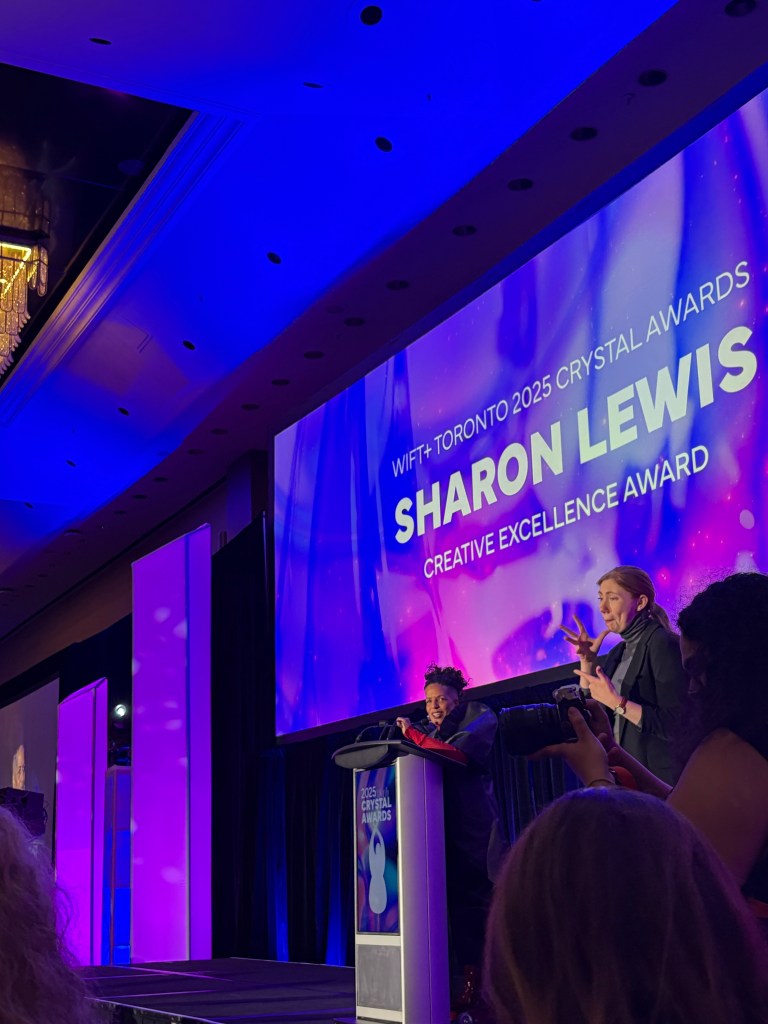
Sharon Lewis, 2025 WIFT Crystal Award for Creative Excellence

What was your reaction to finding out you had been honoured with the WIFT Creative Excellence Crystal Award?
Sharon Lewis: My friend, the actress Melanie Nicholls-King, first put my name forward and asked me who she should approach for recommendation letters. I’ve been in this business for 30 years, and it was great to be able to discover a bunch of people who know my work — and within that, so many women. It was lovely to be able to say, “I also know women of colour who are in positions of power and creating,” because historically that was not the case. There are still not many women of colour Directors working consistently in episodic television in Canada. Unfortunately, not to be negative, but I think “our time” was post-2020 and #MeToo, so we have to work harder now that that momentum has slowed.
All that being said, getting this award was like a beacon of hope, and also a beacon of recognition for all the work that’s been done when you’re in the trenches.
Looking back to earlier in your career, how did you learn to advocate for yourself as a Director, particularly as a woman and a woman of colour in spaces that have historically centred white male Directors?
Sharon: Early in my career, I tried to act like my own idea of what a “tough” male Director was, based on my experience as an Actor. But there’s that old saying: nobody can play yourself better than you. As I’ve gotten older, I think I’ve become more comfortable with who I am and with being “Sharon” on set.
I think the industry has opened up and realized, “There’s not just one way to be,” and I myself have realized, “I can only be this, and this is what I can bring in a unique way.” I also have a fantastic community of support, which has helped a lot.
You’ve worked across so many parts of the industry — episodic TV, features, documentaries, sci-fi and more. How has that diverse experience influenced you as a filmmaker?
Sharon: I started in unscripted, and at the same time, I was shooting my shorts. Queer women of colour have always been at the forefront of my stories, but I felt like I was living in this other world of unscripted where there wasn’t as much diverse representation.
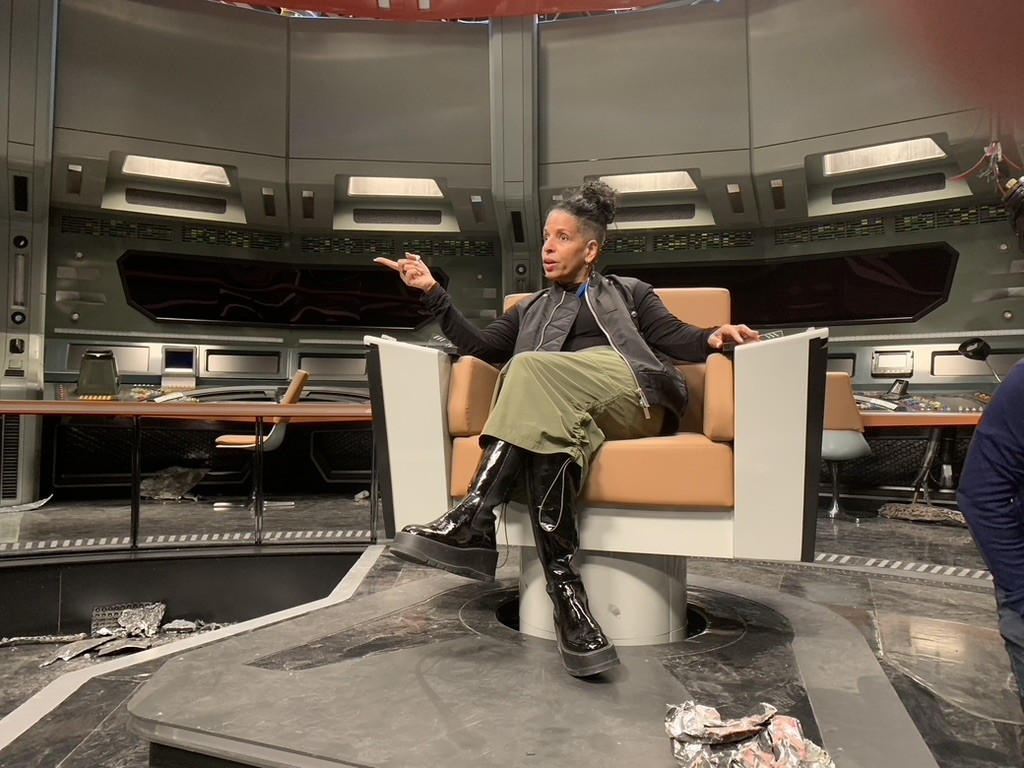
Then an opportunity to direct an episode of Star Trek: Strange New Worlds came up, and those two worlds converged. They wanted to do a documentary-style episode, so they were looking for a Director with experience in both unscripted and scripted work. Back when I was directing Restaurant Makeover, I never thought it would lead me to Star Trek.
Because of all my work centred on Black women, they really wanted someone who could hold the Uhura story, the Black female lead in Star Trek: Strange New Worlds. While I was learning to be a good Director in unscripted, pursuing my passion, I had two skills that came together—and who knew that would lead to Star Trek?
I never planned this specific path, but I did know, consciously, that in doing unscripted, I was learning great storytelling skills on a budget. And by pursuing my own work at the same time, I knew how to tell our stories.
Genre-wise, what are you most drawn to now? And across all of your work, do you notice a throughline in the kinds of stories and characters you’re drawn to?
Sharon: It never occurs to me that I’m a “multi-genre” Director. My priority is always: how can I tell the best story? I love half-hour comedies, but I don’t think it’s my skill set. As long as it’s within the one-hour drama or has a little bit of edge, whether it’s sci-fi or procedurals or Ginny & Georgia, it feels like a similar throughline to me. I am not a horror fan when it comes to slashers, but I have a supernatural thriller-horror feature script in development I’m excited about that I’m taking to Content London.
I like a little sex, a little violence, and a little social justice – character-driven dramatic stories with some kind of message. I directed a sex scene for Power Book IV: Force, and the actress told me how much more comfortable she felt with a woman Director in that scenario. We constructed the lovemaking scene so it felt more mutual, with her having power in that situation, and it was exciting. I think that’s part of why I like directing sexual scenes – It’s another way to put women in power.
You’ve spoken about the importance of community and allies. Did you have any mentors or role models when you were coming up, and how do you approach mentoring younger women and women of colour filmmakers today?
Sharon: I didn’t really have mentors coming up. I’ve had allies, but I wouldn’t say there was a specific Black female mentor. I studied political science, so I wasn’t in a film community. There was no one in my first-generation immigrant family connected to the film or television industry. I now spend a lot of time mentoring, because I know what that’s like. On almost every show, whenever I can, I have an observer. I’ve mentored through the Innis Alumni Black Mentorship Scholarship, Black Screen Office, and Reelworld, and I try to focus on BIPOC women.
I made so many mistakes in the beginning: I didn’t know how to pitch, I didn’t know how to talk about projects, I didn’t know you should get an agent. But I cannot express my appreciation enough for organizations that truly prioritize women. It’s not just Women in Film and Television, but also Women in the Director’s Chair, which gave me one of my first opportunities to train and to really take myself seriously as a Director. Cultural organizations like the Black Screen Office and Reelworld have created communities that have sustained me and kept me going. I may not have had an official mentor, but I did have a fairy godmother: Tonya Williams at Reelworld. She gave me my first investment in my short film, and then later programmed it. She has been a cheerleader not just for me, but for all BIPOC people since the early 2000s.
The DGC is also an organization that’s actually acknowledging that women and women of colour need to be supported in a particular way — that’s huge. Without these organizations, I would not have that community of support that says, “Keep going,” or “I believe in you,” or “You’ve got this.”
You’ve mentioned making a conscious choice, as a Black woman Director, to build up your technical toolkit. What did that process look like, and why is it important for you to have that level of technical fluency when you walk onto set?
Sharon: I had to teach myself a lot, but I also made a conscious decision, as a Black female Director, to go and get technical experience. I took a lighting course because the assumption when I walk on set is that I don’t know anything technical. The assumption when a white guy walks on set is that even if he doesn’t know anything technical, he must be a creative genius.
I took an NFB directing course and cinematography courses just so I have that language and craft, because it’s part of my Director toolkit to talk about lenses and lights, and how it will help me with my blocking.
For me, it’s about building a language so that when I walk on set, I can have those conversations with my DOP and my crew. It’s not about replacing anyone else’s expertise; it’s about knowing enough so that I know what I’m talking about when I make decisions. Especially as a Black female Director, it changes the way people interact with you when they see you really do know your stuff.
Technology is changing the way we make films, from tools like virtual production and the volume wall to better phone cameras. How have these technological shifts influenced your work as a Director?
Sharon: When you’re working on bigger budgets, there are tools that you don’t usually have access to that I think do elevate you as a Director. All of a sudden, you have a palette of 40 paints to paint with, as opposed to six. That comes with its own challenges, but it also comes with people who know how to paint with these colours. You have to collaborate with each other. And actually giving Directors and creators the money and the tools to tell the stories they want to tell is important.
I am pro-technology in a responsible way. I couldn’t be a sci-fi lover if I didn’t love the idea of where technology can take us. My attitude towards technology is that it’s really about power. Who owns it, who’s distributing it, who has access to it? We need to know how to use technology to create our own stories before it gets exploited.
For younger filmmakers — especially women and women of colour — who are just starting out and may feel overwhelmed or unsure where to begin, what advice would you give them?
Sharon: I learned two things. One: follow your passion. But I did that for a long time, and it took me a while to learn the second thing: that I wouldn’t be able to sustain that passion if I didn’t find a way to also survive. Maybe it wasn’t my passion to do Restaurant Makeover, but it was a way to learn important skills and also pay my bills, and I kept making short films. I took whatever money I’d saved and put it into a short film. Anytime I talk to young filmmakers, I tell them there’s actually no reason you can’t make a film. You don’t need anybody’s permission. You can take your iPhone, write a script, and grab three friends. Especially with the whole popularity of vertical formats and 30-second stories — you can do it. Just make sure to eat and take care of yourself!