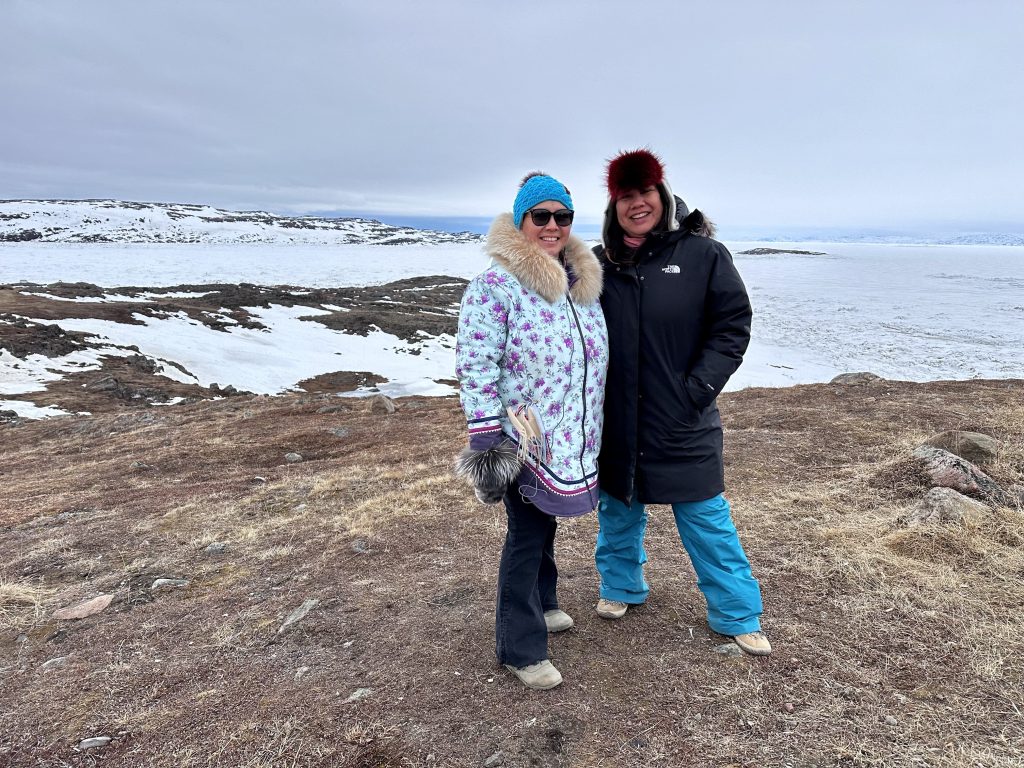
From navigating the complexities of Arctic production to fostering deep collaborations with local communities, they share how North of North balances comedy with culturally resonant details, amplifying Indigenous voices and capturing the vibrancy of life in the North.

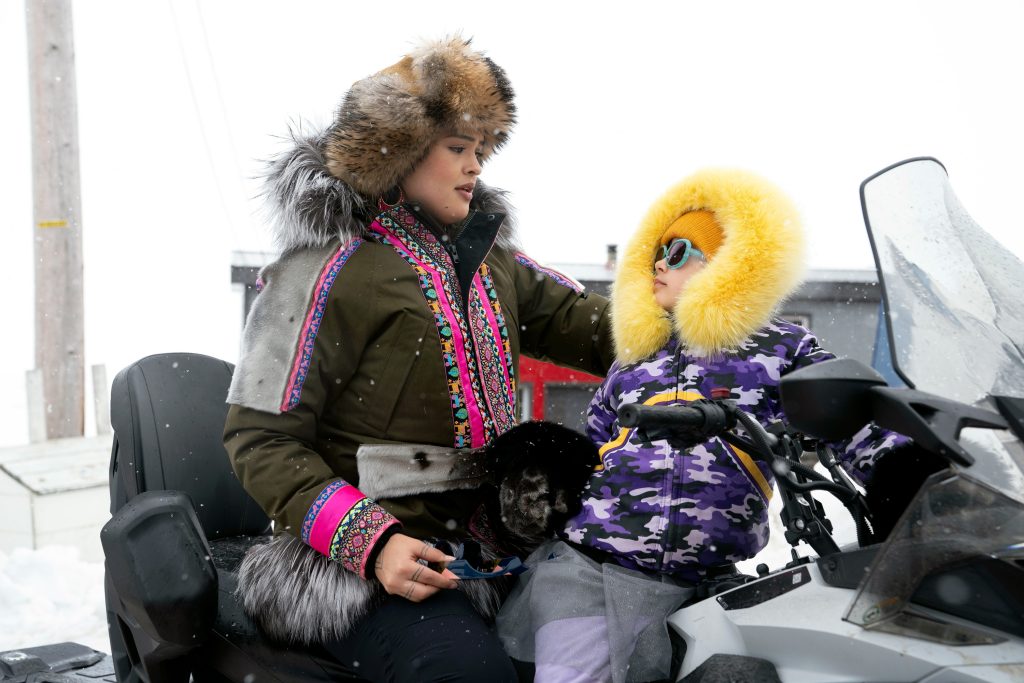
“I remember one day when we had to haul equipment across the tundra. The road ended before our shooting location, so we loaded everything onto sleds and Ski-Doos. The crew had so much fun riding sleds like kids, it was hilarious.”
Director Zoe Hopkins
How did you first become involved in this series?
Director Danis Goulet: I’ve known Co-Showrunners Stacey Aglok MacDonald and Alethea Arnaquq-Baril for a long time, at least a decade. Over the years, I’d run into them, and I knew they had a show in development. Then, finally, there was news that it got the green light. Someone reached out and asked if I wanted to be involved, and I was like, “Absolutely yes!” This is such a big show on so many fronts, and I know how hard Alethea and Stacey have been working to make it happen. Getting a show like this off the ground is a huge deal, and the commitment to shoot in Nunavut was massive. I just wanted to be there to participate and support.
Production Manager Moe Rai: I first heard about the project through the DGC Ontario “production list”, and I was instantly intrigued. I have worked on Indigenous productions before, like Acting Good in Winnipeg, and I learned so much from that experience. As an immigrant, I never really got the chance to learn about Indigenous cultures in Canada growing up, so when this opportunity came up, I was all in.
People kept saying, “It’s too cold up there,” but that didn’t bother me. I love travel productions, and I’ve worked on productions in Sri Lanka, the Middle East, and Europe, so the idea of heading up North excited me. I love these kinds of productions where you travel and have immersive experiences. I also knew how scarce film resources were in the region, and I wanted to help however I could, whether training people or helping build the local film community. So I kept reaching out to the Line Producer, letting them know I’m available and I’m really interested in this. I thought I could bring a different cultural aspect just because I’m from a different background and I’m aware of certain things like cultural biases.
Director Zoe Hopkins: Alethea told me about the project years before it started. We’ve been friends through imagineNATIVE and filmmaking circles for a long time, so I was eager to be involved in any way—writing, directing, whatever they needed. When it finally came together, I was thrilled to come on as a Director.
The pitch package was incredibly impressive, and having Netflix, CBC, and APTN on board made it even more exciting.
What were some logistical challenges of getting this production up and running in Nunavut?
Moe Rai: Luckily, Northwood Entertainment had done some projects there before, and our Co-Showrunners, Stacey Aglok MacDonald and Alethea Arnaquq-Baril, are from the community, which was a huge help. But the challenges were real.
Getting equipment and supplies up there was tough. Most shipments come in by sea, but there’s only a short window when the water isn’t frozen. Otherwise, everything has to be flown in on cargo planes, which is ridiculously expensive. We had to plan everything months in advance.
In Toronto, if a vehicle breaks down, you call a mechanic, and it’s fixed. In Iqaluit, one or two mechanics are servicing the entire town, and parts take forever to arrive. The same went for generators – we had to fly them in, completely drained of fuel, and then find someone locally to get them running again. We also couldn’t bring in regular portable washrooms because the pipes would freeze, so instead, we hired extra drivers to shuttle the crew to their hotel washrooms.
Hiring crew was another challenge. In Toronto, you can call for daily hires and get crew. But in Iqaluit, most people already have jobs. We were guests in their community, so we had to respect their schedules. The usual “get it done now” attitude in film production just didn’t work. We had to adapt.
That being said, the community really wanted this production to succeed. They helped in any way they could, like offering support and introducing us to people who could help. They were so excited to have a CBC/APTN/Netflix show filming there.
Zoe Hopkins: There wasn’t an existing filmmaking infrastructure, so everything had to be shipped up months in advance, sometimes as early as six months before shooting. I wasn’t involved in that logistical side, but I know the production team worked hard to bring in everything we needed. It felt like a travelling circus!
Social media played a big role in finding extras and resources. Our Props team made strong connections with locals, who helped source items we couldn’t just order from the city. They built such close relationships that they went hunting and ice fishing together.
I remember one day when we had to haul equipment across the tundra. The road ended before our shooting location, so we loaded everything onto sleds and Ski-Doos. It was only a few hundred feet from the road, but carrying tents, cameras, and other gear over the snow was a major effort. The crew had so much fun riding sleds like kids, it was hilarious. I took videos of them laughing as they pulled the equipment across the snow.
I was so excited to see the Northern Lights, but by the time I arrived, it was already full daylight season, so the sun never set. In the South, we’re always fighting for daylight hours to shoot, but when you’re up there, you don’t have to worry about that because it’s always light. Characters are going to the bar, and it’s supposed to be a night scene, but it looks like it’s in the middle of the day.
Danis Goulet: There were logistical challenges and labour challenges. There’s not a huge pool of labour to throw at a problem, but the crew did an amazing job. A lot of people from the South were brought up to collaborate with the community, and they had to be ready for a different way of doing things. They really had to shift how they normally work. It’s about not imposing how things should be done and being flexible.
Whatever the challenges were, we gained so much from being there – not just from the cast and background performers but also the locations we accessed. On most shows, there’s a creative division between inside the studio and outside on location. But in Nunavut, the outside offered so much. We shot in crazy ice formations out in the bay, Arctic mountains, beaches, and huge landscapes. We went wild with drone shots. Even just setting B cameras up in the community captured unique moments – a dog running around, someone bicycling their groceries home on a snowy road. The North offers things you wouldn’t see anywhere else. The creative possibilities were amazing. So, for all the challenges, what we gained was incredible.
“I don’t think people can really understand the remoteness until they’ve been to a place like [Iqaluit]. It gives you this deep appreciation for the people who have lived on that land, thrived on it, and made their homes and families there. I was also struck by the community’s vibrancy and joy and how we were welcomed into people’s homes.”
Director Danis Goulet
How did you collaborate with local communities and organizations to support the production?
Moe Rai: We built some sets in Toronto first, just to test things out, then shipped them up North. Once we got there, we adapted them for the environment. Our main filming hub was the Iqaluit Curling Rink, which we turned into a makeshift studio. That became our community center and office space sets. But we also filmed in real locations like stores, community halls, and homes because we wanted to be as integrated as possible.
We made it a priority to hire and train locals across different departments, like Props, Wardrobe, Set Decoration, Locations, and the AD team. Many of them had worked on short films or documentaries, but they had never been on a production of this scale. A lot of people were like, “Wow, this is really stressful, how do you guys do this all the time?” It’s amazing to stop and reflect on that. We also had cultural advisors on set to make sure we were being respectful. There are so many small things we might not even think about – biases, traditions, ways of communicating. Having people from the community involved in every step made a huge difference.
I think future productions can build on what we started. With Zoom and remote training, we could prepare crews beforehand or send ambassadors from different unions to teach specific skills. There’s a real hunger for this kind of work up there.
One great thing is that we left behind resources for future productions. Now that people have seen how a big production can work there, I think the process will be a lot smoother next time.

Zoe Hopkins: Either Alethea or Stacey were always present when we were shooting a scene. They were incredibly busy as Co-Showrunners, but if I ever had a question, like how food should look on a plate, one of them, or even an actor, would guide me.
For instance, we were setting up a meal with country food like muktuk, and we placed it on a plate. Someone corrected us: it should be on a piece of cardboard. Another time, we had a man serving muktuk with an ulu knife. Alethea ran onto set and told us, “That’s a woman’s knife.” None of us knew! We quickly found the right knife. Having that constant guidance ensured we got the details right.
Danis Goulet: The collaboration with locals happened on all fronts. But I have to say, it’s really on the shoulders of Stacey and Alethea, who were leading that charge. It speaks to the multi-dimensionality of their roles. They were Showrunning for the first time, writing this comedy set up North. But as Indigenous creators, there’s always this weight because of the history of misrepresentation – over 100 years of getting our stories wrong. We feel passionate and committed to getting it right while also pushing the boundaries of what our storytelling can be. Sometimes, you want to challenge things. Alethea and Stacey were pushing on every front—creatively, in terms of representation, and working within their own home communities. They both live there, and they have to stay in the community. So, any challenges that come up fall on them.
What was on their shoulders was huge—handling community issues, personal losses, and behind-the-scenes challenges. No one really understands everything they were holding together to put this show on. I have so much love, respect, and appreciation for what they did because they pulled off moving a mountain.
Zoe and Danis – as Directors on the series, how did you approach balancing the comedic tone of the series with the deeper, culturally significant themes about Inuit identity and community?
Zoe Hopkins: Since Little Bird, I’ve mostly worked on comedies, so North of North felt natural. In comedy, it’s all about capturing emotions and timing. The actors were incredibly game for anything, which made directing a joy. One of my favourite moments was choreographing a love scene in my episode. It was my last day of shooting, and we just laughed all day. Love scenes can be delicate, but this one was pure fun. The actors threw themselves into it, making it even funnier.
The cultural aspect of the show was naturally embedded. Since it was written in an Inuit writers’ room, the authenticity was already on the page. When Indigenous filmmakers get to tell their own stories, we don’t have to work to “sell” the culture – it’s just there. And when we have the opportunity to tell our own stories, we get to focus on making human characters, and that is what is really engaging for all audiences. I think people will identify with the story because of the universality of the humour, even though there’s such beautiful cultural specificity.
Danis Goulet: You let the serious moments be what they are and be honest about them. It’s not about worrying if it’s going to hit too hard or not be funny. You find the balance between light and dark, letting something move you because it should. Transitions between those moments are important, but I think it’s okay to let serious moments be powerful. I worked on Reservation Dogs, and that show balances dark and joyful moments so well. You need both. Authenticity is key—sometimes that’s a funny moment, sometimes it’s a painful one. It’s okay to have it all there.
What do you hope viewers take away from the series? Do you think shows like North of North “demystify” Inuit culture and depict it in a relatable way?
Danis Goulet: I think people will relate to the universality of it, but there’s an incredible specificity too. It’s women-led, focused on women’s relationships. The heart of the show is the mother and daughter—they’re such kick-ass characters. It’s not like anyone’s life is untouched by trauma, and the show does explore that as it goes on. But it also captures the community’s vibrancy, joy, humour, and laughter. There’s so much of that in our communities, even in dark times. Seeing a show capture humour with cultural specificity is such a gift. Even though it’s in a sitcom format, it redefines what a sitcom can be.
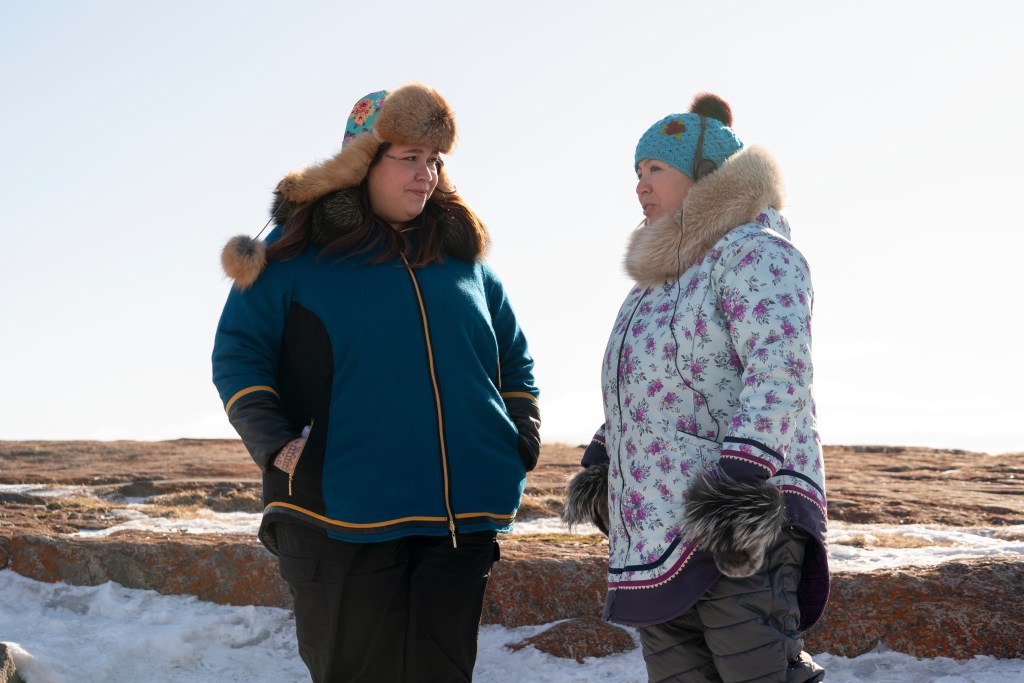
Zoe Hopkins: It’s a universally relatable story of a single mom finding herself in humorous ways but set in an incredibly unique location. Every episode, I was struck by the beauty of the North. The landscape, the people in their parkas, the fur, the architecture, it’s stunning. I think it’s going to make audiences laugh, but I also hope they’re really taking in the beauty of the North at the same time.
There’s something irreplaceable about filming in your own community. I’ve made several films on my territory, and there’s no way to put a price on that. You can’t replicate the authenticity of shooting on location. This show couldn’t have been made in a Toronto studio; it just wouldn’t be the same.
Moe Rai: I think the teams did an excellent job portraying these communities. The writing was fantastic. It wasn’t glorified, this is how they live. I met these people, I sat down and ate with them. The Production Design was fantastic, the Editing, it’s a true representation.
More than anything, I hope viewers see how warm and resilient the Inuit community is. They’re so welcoming and supportive of one another. Coming from Syria, I was shocked at how many cultural similarities between their culture and mine I noticed. It just proves how connected Indigenous cultures are, no matter how far apart we live.
“For filmmakers thinking about shooting up [North], my advice is simple: be flexible and respectful. Don’t expect the community to adapt to you; you need to adapt to them. If you embrace the experience with an open mind, you’ll come away with something truly special.”
Production Manager Moe Rai
Are there any memories of your time working on this production that stick with you?
Danis Goulet: The first day I arrived, we were shooting outside. It was pretty cold, and we were on this ridge, outside the whole day. The land there is just so beautiful—you kind of forget about the cold. It was an exciting episode in terms of the drama, and I just loved being on the land.
There was another day when we shot a big party scene with a bonfire, everyone dancing around it. We got the drone up for that, and it looked so beautiful. The sun was rising around 2:30 a.m. and setting around 11 p.m. when we left. It messes with your sense of time—it’s 10 p.m., but it feels like five. Your body’s confused, but it gives everything this strange, amazing energy. The light there was incredible.
I’m from Northern Saskatchewan, all boreal forests and lakes, and the most striking thing to me in Nunavut was the lack of trees in the Northern landscape. I don’t think people can really understand the remoteness until they’ve been to a place like that. I know what it’s like to live somewhere with low population density, like Northern Saskatchewan, but Iqaluit is a whole new level. It gives you this deep appreciation for the people who have lived on that land, thrived on it, and made their homes and families there. I was also struck by the community’s vibrancy and joy and how we were welcomed into people’s homes. It was such a wonderful experience.
Zoe Hopkins: I had two favourite scenes. The first was a dream sequence inspired by Bridgerton, featuring a breathtaking dress designed by Deborah Hanson. It blended Bridgerton-style romance with Inuit culture. I took photos of Anna Lam in it, standing on the tundra, and it looked like a Vogue magazine cover. Watching her run in slow motion, leading to a romantic kiss before the dream ends in a funny twist, was a perfect blend of beauty and humour.

The second was the love scene I mentioned earlier. It involved a French musher in a sealskin loincloth, which was already funny on the page, but the actors made it even better. When I choreographed the love scene, the actors were so game to do every funny idea I had, and then they brought their own funny ideas, too, and we laughed all day. It was even funnier in editing, which was surprising to me. Sometimes, in editing, you lose sight of the joke, or it just becomes unfunny after you’ve seen it so many times. But I laughed all the way through, and I really can’t wait for people to watch it.
I loved being there; it was so beautiful. And it was fun to go with the crew on the weekend and just have a bonfire out on the tundra – it never got dark, so we could be out on the tundra at two in the morning. I got to go dog sledding, and I bought the best earmuffs and seal-skin mittens. Every time we left the hotel to go to set, we’d be driving somewhere different. And every day, being out on the land or out on the tundra or out on the ice, I always gasped at how beautiful it was. It was so incredible. I loved being there.
Moe Rai: If there’s one thing that stuck with me, it’s how much more support these communities need. There is systemic racism present, and the cost of living is so high. A flight to Iqaluit is more expensive than flying to Europe. Some families go years without seeing each other because travel is just too expensive. Housing is sometimes tied to employment, so if you don’t have a job, you might not have a place to live. The government really needs to step up and do more.
For filmmakers thinking about shooting up there, my advice is simple: be flexible and respectful. Don’t expect the community to adapt to you; you need to adapt to them. Our industry moves so fast, but that’s not how things work in the North, and that’s okay. If you embrace the experience with an open mind, you’ll come away with something truly special.