By guest contributor and DGC Ontario Director Jason Krawczyk
When my university roommate and I first sat down and watched Ginger Snaps back in 2000, we were immediately entranced by a werewolf movie unlike any other. Starring a pair of teenage sisters, with one slowly succumbing to lycanthropy, not only was it an entertaining horror romp, but a hypnotic parable on adolescence. With a twinge of dark humour, a killer soundtrack, and a unique spin on werewolf design, Ginger Snaps separated itself from the pack and immediately entered cult classic territory.
“My last movie got lost in the shuffle, and I didn’t want that to happen again. I wanted to make something that left an indelible impression. Identify the tropes and go in a different direction,” says Ginger Snaps Director John Fawcett (that ‘last movie’ is a stellar little crime thriller titled The Boys Club. Right after you finish this article, and a Ginger Snaps rewatch, go search out The Boys Club). “Making a pair of sisters the leads felt like an unusual place to begin.”
Behind-the-scenes featurette from Ginger Snaps, 2000
“[Screenwriter Karen Walton] showed up with Harold and Maude, and I thought if we can make this funny and morbid like that, I’m so down for it. We made this little love child out of all that which we called Ginger Snaps.”
Director John Fawcett
With his approach ideology locked in, Fawcett was able to tightrope walk horror, comedy, and coming-of-age drama while imbuing themes of sisterhood, social outcasts, and puberty. It’s a dizzying undertaking, but the movie still feels like pieces from multiple different puzzles assembled into an entirely fresh take on lycanthropy. It had me question how many of Ginger Snaps‘ idiosyncrasies were planned and how many happened organically.
“The tone was always something we were striving for right from the beginning,” comments John Fawcett. “We wanted to make something horrifying, but we also wanted it to be fun. Heathers had this beautiful, dark comedic tone that really inspired us. The Fly, Dead Ringers, and especially Peter Jackson’s Heavenly Creatures. That ‘us against the world’ mentality. We also looked to An American Werewolf in London, but that was the only real werewolf movie we were referencing. Keeping that tonal balance was very important, and Karen Walton is also a really funny and self-deprecating writer, so there was a deep degree of authenticity in her work.”
Working closely with Screenwriter Karen Walton boosted the confidence in what Ginger Snaps could be, and one reason was that Walton wanted nothing to do with horror. “Karen and I worked through the story as a metamorphosis movie and not a werewolf movie. The transformation metaphors of adolescence and puberty came naturally, and it grew organically while working with a female writer. Karen wasn’t into horror movies, but I had to convince her they could be more thematic. She showed up with Harold and Maude, and I thought if we can make this funny and morbid like that, I’m so down for it. We made this little love child out of all that which we called Ginger Snaps.”

“My agent called a few weeks later, saying ‘You have to see the New York Times.’ There was a glowing review from a critic who went to that little indie theatre, and by the end of that week, we sold to HBO.”
Director John Fawcett
To personify a beast that represents the discomfort of teenage hormones, Fawcett reached out to a very familiar artist in the Canadian film scene: “Vincenzo Natali is an incredibly talented Director, and I love his film Cube. He helped design the monster. I wanted to avoid a gigantic hairy monster. I didn’t want it to look like a lion. It had to have hair in weird places, like what’s happening in puberty, and still see human female traits, so I thought it would be interesting to see multiple breasts. Trying to achieve it in reality was a feat, as it was all old-school practical effects with the money we had.”
Despite looking seamless today, making an indie monster movie in 1999 came with its own trials. “I was fretting about the monster. I didn’t think anything was believable. Vincenzo did storyboards for all the monster stuff. He’s a great collaborator, but he has such a unique point of view. The more complicated the sequence was, the more he storyboarded. Blair Witch scared the bejesus out of people the year before, but you’re not really seeing much. What you don’t see is scarier, and with a low budget, that’s what you’ve got to do. We ended up cutting half of the werewolf stuff out. The other elements, like the humour and the real-world setting, evened out and grounded the sillier aspect of a werewolf virus.”
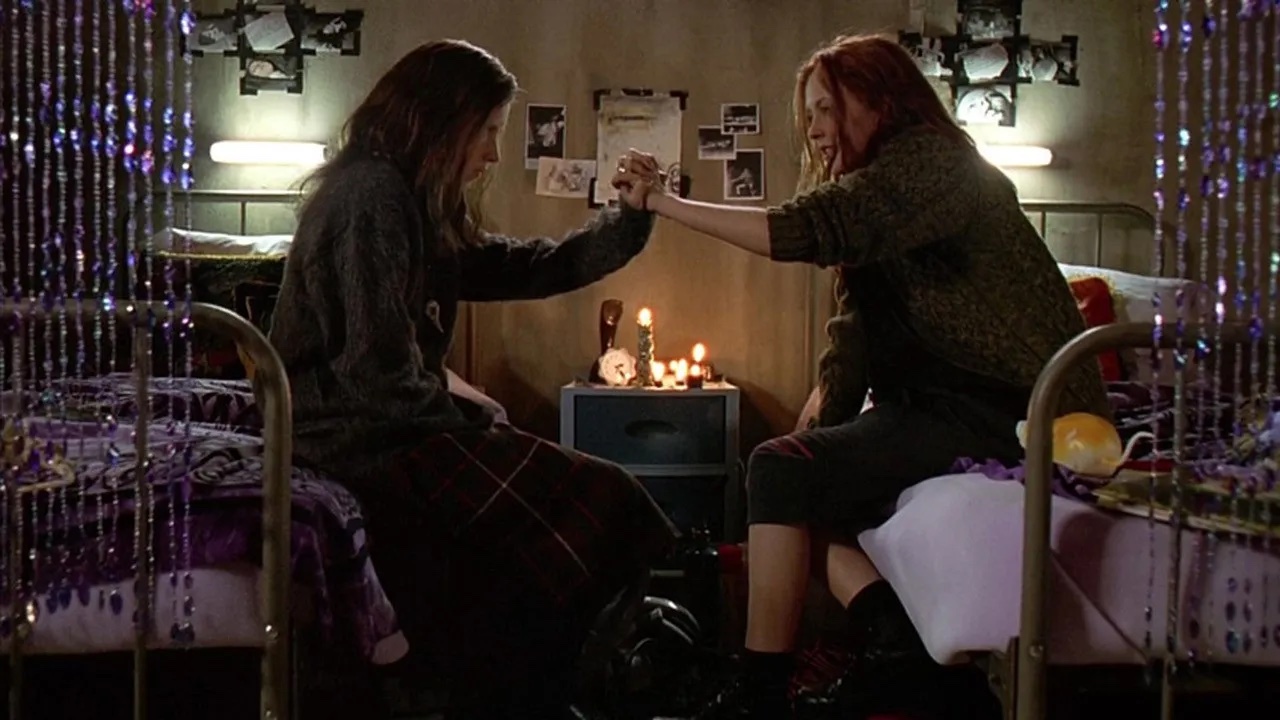
To tie the whole thing together, a soundtrack that reflected the time and also held to the themes of being an outsider was key. “Kudos to the Music Supervisor [Scot McFadyen]. We mined a lot of cool stuff for The Boys Club, and we felt like Ginger Snaps needed grit and attitude. Every time we talked about these characters — what their bedroom looked like, what they were wearing — we wanted nothing to do with pop culture. We needed a complete us-against-them mentality, so I didn’t want them to have anything contemporary. That’s how we enticed most of the bands. Artists are artists; they were young and struggling too. Interesting bands want to be associated with that. It’s not about the money-making machine, it’s about passion.”
Despite being a cult classic today and a must-see for audiences in October, Ginger Snaps wasn’t championed by the public right out of the gate. “After TIFF in 2000, we could not sell this movie. People liked it, but distribution companies wanted to re-edit it in a way they deemed marketable. I refused, so it sat on a shelf internationally. It was very disheartening. There was an indie theatre owner at TIFF from New York who called me personally because he wanted a print for October. I said, ‘Just pay for the shipping cost.’ My agent called a few weeks later, saying ‘You have to see the New York Times.’ There was a glowing review from a critic who went to that little indie theatre, and by the end of that week, we sold to HBO.”
“It’s a testament to its uniqueness and its themes. It strikes a chord to this day. Everyone’s gone through adolescence, so everyone can relate. Life can feel pointless, and there wasn’t a lot of opportunity in the suburbia where I grew up, which motivated us to do something beyond what is expected of us.”
Director John Fawcett
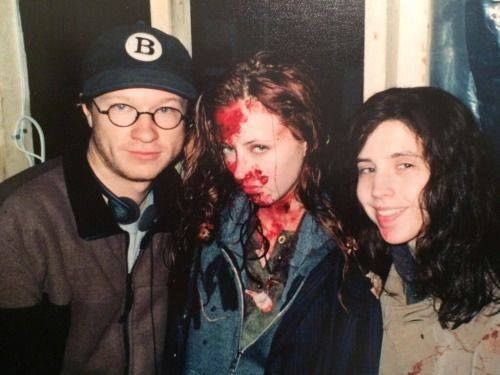
When asked about the unexpected success after accepting failure, Fawcett went on to say, “It was just lucky, to be honest. It was definitely a slow burn. I moved on. I cried tears into many drinks. ‘I’m never going to make another movie again.’ It’s a testament to its uniqueness and its themes. It strikes a chord to this day. Everyone’s gone through adolescence, so everyone can relate. Life can feel pointless, and there wasn’t a lot of opportunity in the suburbia where I grew up, which motivated us to do something beyond what is expected of us.”
Even with Ginger Snaps‘ success, the lessons learned on set were the biggest victories. “The last scenes we shot were Ginger’s death. We were tired and sick. We just wanted it to be over. And Emily [Perkins] delivered a wonderful performance, tears streaming down her face. I realized that her believability of raw emotion was the real power of Ginger Snaps. It’s not about the effects or cinematography; it’s about the characters and how we relate to them. Otherwise, you’re making a music video. You gave a shit about these characters.” And if anything leaves a lasting impression in horror, it’s character.
Ginger Snaps is available to watch for free with ads on PLEX or streaming on Amazon Prime Video.