Jay joins Wider Lens to talk about his passion for genre-bending films, the excitement and pressure of working on a sequel to one of his childhood favourites, and the collaborative process with Tim Burton that brought this iconic character back from the afterlife.
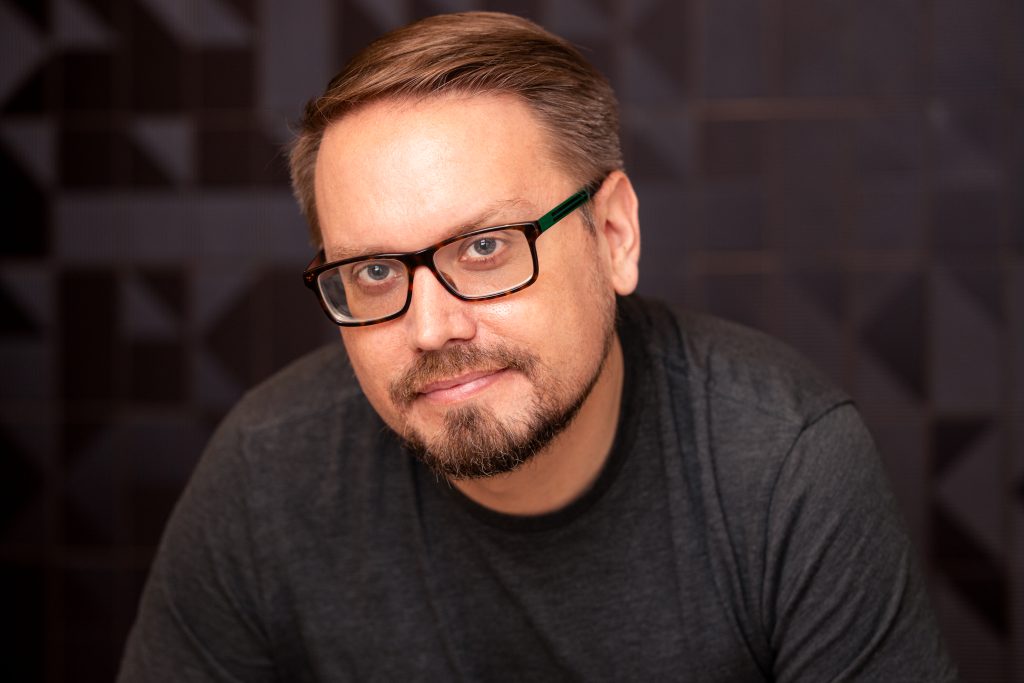
You first started working with Tim Burton on Wednesday, a few years ago. How did that experience translate to coming aboard Beetlejuice Beetlejuice?
Jay Prychidny: Beetlejuice Beetlejuice was up in the air when Wednesday ended. I was aware that the writers of Beetlejuice were asked to take a pass at the script and that it was possibly going to be Tim’s next project. But it was all very ephemeral at that stage. For Tim, a project isn’t a project until the contracts are signed or the studio has greenlit something. I spent several months just hoping this film would happen. I turned down another film offer in the hopes that this would be greenlit, and that was heartbreaking. But I was just hoping and praying that Beetlejuice would happen, and thankfully, it did.

Can you describe the experience of working on the sequel to such an iconic film?
Jay Prychidny: When the first film came out, I was seven years old, and it became my favourite movie for a couple of years – until Terminator 2, and then that was my favourite. But Beetlejuice was a huge part of my childhood. Tim Burton’s other movies at that time were also hugely influential to me in terms of opening my mind to the idea of what an auteur is and who the craftspeople behind the scenes are. For many kids, Tim Burton is the kind of Director who gets you thinking about filmmaking because he has such a unique, identifiable vision. Everyone – Tim, the writers, the actors — came into Beetlejuice Beetlejuice with a huge feeling of responsibility to live up to such an iconic movie. It was a singular film; it wasn’t designed to have sequels, so what does a Beetlejuice sequel look like? What is it? So there was a lot of pressure on everyone to figure it out.
What was the editing process like with Burton? Does he like to see things right away? Is he very involved with the editing process? Or does he trust you to come up with your own ideas and then run them by him?
Jay Prychidny: My first project with Tim Burton was Wednesday, and my second one was is new Beetlejuice film. Both are the names of characters and in some ways, that informed what the editing should be like. For Wednesday, I was very intentional in editing it as though Wednesday herself had edited it—getting inside her head, reflecting her style, and making the editing reflect who she is as a person and a character. The same thing applied to Beetlejuice. The film has two aspects: the afterlife and the land of the living. When it comes to the afterlife, or when the afterlife crosses into the land of the living, I thought the editing should reflect Beetlejuice’s character—wild and crazy, with abrupt shifts in tone. Beetlejuice is a character who can snap his fingers and turn into something else, and that’s reflected in the editing, with hairpin turns in tone, almost like a Warner Brothers Looney Tunes cartoon in the way it’s edited and uses sound effects.
Early on, I asked Tim if that sort of cartoonish editing was still part of the film’s language for this sequel, and he said, “Yes, absolutely.” That gave me free rein to make it as wild and crazy as I could imagine.
The “land of the living” scenes were approached quite differently. There’s a stark contrast—when we’re following Lydia and her daughter, Astrid, who are both morose and moody characters, that moodiness is reflected in the editing of those scenes as well.
Regarding Tim’s editing process, he’s very much involved all the way through because it helps inform him of what he’s shooting. Every day, sometimes multiple times a day, he’d come by the editing room, which was right beside the set, and say, “Show me what you’ve got,” or we’d look at dailies or scenes together and give notes and feedback. But mainly, it’s for him to see how things are evolving—the tone, what’s working, what isn’t—so he can adapt his shooting accordingly.
One example is the first scene of Beetlejuice’s main dialogue in the movie. It was the first scene they shot with Michael Keaton, and it was done in a particular style, treating him more like a human, like a regular person moving around the space. Tim was immediately uncomfortable with that because it didn’t seem to fit the character. So that first scene was heavily re-edited. We didn’t re-shoot it, but we interspersed it with all kinds of wacky stuff to take away the feeling of him just being a guy in a room. Moving forward, that affected how Tim shot the character—less like a person walking around and more like Beetlejuice, who doesn’t need to walk; he just snaps his fingers and appears across the room.

How do you strike that balance between scary and funny with a horror-comedy like Beetlejuice Beetlejuice?
Jay Prychidny: It’s interesting because Beetlejuice is a demon and is supposed to be scary. Sometimes when we’ve seen the character in other media adaptations, like the cartoon or the musical, they tend to veer toward this purely Looney Tunes feel, which is just wrong in terms of how Tim sees the character. Tim always responded strongly if there was a shot or a moment where Michael looked scary or evil. We really protected and kept those moments in the movie because it’s important for the character not to get too loose and silly and still have some weight and terror. The movie has some scary bits, especially for kids. But that’s what I love about switching genres and tones within a project —it’s so much more fun to edit. It also helps make things scarier because you never really know what you’re going to get. Is this a comedic scene, or is it scary? That keeps the audience on their toes and surprised. The kind of thing I love is when you keep the audience guessing and surprised by what they’re seeing.
You also cut Scream VI before this film, the newest sequel to another series of horror comedies. How did that opportunity come about?
Jay Prychidny: Luckily for me, that film had a very quick path to production. Paramount was the lead studio on that film, and the executive in charge of Post Production there reached out to a Post Producer I had worked with a few times and asked for recommendations. I was working on Snowpiercer, a show I edited and produced. I was about to start on Snowpiercer Season 4, and this producer pitched me really hard to Paramount to edit Scream VI, even though it meant I wasn’t going to be able to edit Snowpiercer Season 4. Paramount went to the directors and producers of the film and said they thought I would be a really good choice. I was very grateful because I’m a huge fan of Scream, just like I’m a huge fan of Beetlejuice. To be able to work on both of these franchises is really a childhood dream come true for me.
Do you typically gravitate towards horror or sci-fi films? Is there something about that genre that really appeals to you as both a film fan and an editor?
Jay Prychydy: I am a huge fan of horror, and in general, I’m a huge fan of sci-fi and what it can do and say about the human condition. But I also love musicals, and it’s definitely on my bucket list to edit a musical one day. The Leftovers is an example of a drama that was incredibly creative and stylistic in its editing, and I would love to work on a show like that. Getting to play within a larger sandbox of editing tricks, tools, styles, and techniques is definitely more my happy place.
What was it like being a Producer and an Editor on Snowpiercer? How do you balance those two roles?
Jay Prychidny: I was previously a Producer Editor on Orphan Black as well as a few children’s shows like The Next Step. It always happened very naturally in all the cases and grew out of my editing role. I would take a more heightened involvement in the project—not just editing my own episodes but supervising the editing and getting involved in the Sound Mixing, Music, and Visual Effects for every episode. I’ve always really enjoyed guiding hands creatively on a project because I love editing and being creative, but I also love all these disciplines. I love Sound and Music, and to be creatively involved with the experts in those fields is incredibly rewarding. Seeing the finished product makes me much more proud because I feel like I’ve greatly impacted it.
It seems like there’s really a trend where post-production in Ontario is booming right now. Why do you think this is becoming a trend? It seems like a lot of directors want to work with our people, which is very exciting. Have you noticed that happening lately?
Jay Prychidny: It was much more daunting in the past for productions to come to Canada for post-production. 10 years ago, it was just so much more of an unknown quantity. Even beyond the talent pool that was here, no matter how good or bad it may be, that wasn’t the issue. It was just that there were so many barriers—not insurmountable, but still, rules around employing foreign people and all those kinds of things were quite daunting. Now, it’s becoming more and more common for American companies to set up shop in Toronto. When they see that they can employ people who have a great list of credits and are incredibly sellable, it just makes it a no-brainer. So I think the tide has turned on that. Now, a lot of American producers have had that experience, and it’s not quite as scary a proposition as it used to be. The economic realities tied with the great Post Production talent pool make it a really viable option.

What do you hope audiences take away from seeing Beetlejuice Beetlejuice?
Jay Prychidny: I just really hope the movie does well and people like it. There’s so much anticipation for it, and people are so excited that it can be intimidating to know you’re following up on an iconic film 30+ years later. I’m nervous but hopeful because I have seen how early audiences have responded, which has been incredibly gratifying and positive. Even seeing the reactions of people who worked on the film, you could tell they were genuinely thrilled with the film and proud of their contribution to it. There was freshness and energy in working on this project, and that really made everyone want to bring so much to it. Everyone from the Sound teams to the actors, you could see people were trying to make it the best film they could, which made it such a thrill to look at the dailies every day. Sometimes when the dailies would come in, there would be a scene that they were scripted to shoot, and when the footage came back, it bore no resemblance to what was in the script. Everyone had their own ideas and brought their own creativity, so they were just inventing stuff on the fly, and there was such an incredible amount of inspiration. It was so joyous to see that and to have helped bring that to cinemas.
Beetlejuice Beetlejuice opens the Venice Film Festival on August 28 and in theatres on September 6.