The Wider Lens spoke with Director Stephen Dunn (DGC NFLD), Director Helen Shaver (DGC Ontario), Supervising Art Director Jody Clement (DGC Ontario), Music Editor Paul Intson (DGC Ontario), and Assistant Location Manager Eric Elliott (DGC NFLD) about the creative and logistical challenges of filming along Newfoundland’s coast, and how the combined talents of Ontario and Newfoundland crews helped shape the world of Below.
How did you first come aboard Below, and what spoke to you about the project?
Stephen Dunn: I was in Los Angeles when I met with Showrunner Jesse McKeown and Executive Producer Chris Hatcher over Zoom. I’d read a few episodes, and what jumped out was that this was a story about Newfoundland, shot in Newfoundland, and it wasn’t trying to mask itself as somewhere else. Even the little details in the scripts, like Jiggs dinner and the Bud Light hats, felt so specific. Resettlement, folklore, icebergs, the ocean, the giant squid–it touched on so many parts of Newfoundland identity.
I’d been working in the United States for about ten years. Newfoundland has always been such a big part of my life, even when I’m in LA. Coming home to direct something of this scale, with that much love for the island behind it, felt like an enormous gift.
Helen Shaver: What spoke to me about Below when I first read the scripts was that the story evokes the situation we’re all living in without getting up on a podium and preaching.
It’s about community, climate change, forced migration and what lies beneath, in our subconscious and in the folklore of people who live by the sea. There’s always a monster below.
-Director Helen Shaver
I’m not a Newfoundlander, so I come to it as someone from away, but I connected to the individuality of that culture. I’ve worked in many places, and one thing I appreciate about Canada is that our communities can remain so distinct.
Jody Clement: I was finishing a Netflix series in Toronto called Something Very Bad Is Going to Happen when Chris Hatcher approached me. He said, “I’m doing this project in Newfoundland. I’d love for you to come out.” I hadn’t collaborated with Production Designer Emmanuel Fréchette (DGC QC) before, but it turned out to be a great fit, and it was wonderful to get the chance to work with him.
I was a little uncertain about leaving home for what turned out to be six months in Newfoundland. That’s a long time to be away and basically move your life somewhere else. Now, I’m so glad I didn’t turn it down. It was phenomenal, and I’d go back to work there in a second.
Eric Elliott: We’d heard rumblings that Netflix was coming to Newfoundland, so we were keeping an ear out. I’d built good relationships with people in the Locations Department, and we tend to work together. Location Manager Terry Stone had hired our Office Assistant Location Manager, Colton Simpson. Colton reached out and said, essentially, “Netflix is here. We’d like to offer you a position.” I was absolutely going to say yes.
I started on Below as a Locations PA. Early in the shoot, our on-set Assistant Location Manager had to leave, so I stepped into that position for most of the production. It was a big opportunity for me, especially on a show of this scale.

Paul Intson: One of the pleasures of working on the series was working with Jesse McKeown. He had a clear vision, but he was genuinely open to finding the best way to tell the story. He was one of those people who felt familiar right away, like someone you’d known for years. I’m really looking forward to seeing what he does next.
How did you turn real communities into the fictional town of Snooks Arm, and how did you make the community feel lived-in and real?
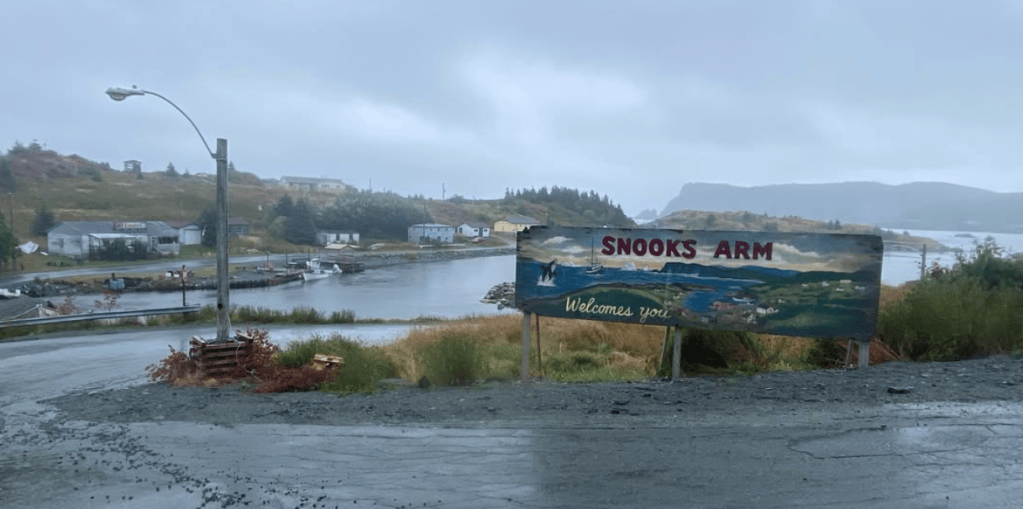
Jody Clement: There really is a Snooks Arm in northern Newfoundland, but our Snooks Arm was based in Brigus South, just over an hour south of St. John’s. Emmanuel Fréchette had been out pre-scouting with the producers and a Location Scout before our official prep began. The views were stunning, but the community didn’t have every building we needed to create the village, so we started adding things.
We clad the front of an existing house to make Linda’s Bar. We turned another house, a pretty simple A-frame, into a church by cladding almost the whole building, adding a front deck and building a tower. The church wasn’t even in the script, but churches have traditionally been so central to Newfoundland communities. Once it was there, it ended up appearing on screen a lot.
We turned an existing white government building into the Fisherman’s Wharf, with its rusty, brick-red exterior. We built a harbourmaster’s shack on the pier, extended the floating dock, added a façade for the Penney house and built its interior on a stage. We also built the front of a closed fish plant, fishing shacks along the waterfront and a big “Welcome to Snooks Arm” sign aged to make it look as though it had been there for years. The exterior of the Fishermen’s Hall was built from the ground up in Brigus South, but the interior was in Pouch Cove, north of St. John’s. The town you see on screen is really a combination of places.
For Linda’s Bar, we filmed the interior in an existing bar in Harbour Main. We took inspiration from real Newfoundland bars: photographs of fishermen and their families on the walls, local beer references, all those things that make it feel like people have been going there for decades. It needed to feel like an actual community space, not something we’d dressed for one scene.
We also had our Art Department drive around, looking for old fishing shacks that people weren’t using anymore. They’d knock on the door and ask, “Can we buy that shack?” Our Construction Department would move it as intact as possible, make it structurally sound and bring it into Brigus South.
It was a reduce, reuse, recycle approach, and the weathering was already exactly what we wanted. Sometimes, there were gems of set dressing inside the shacks, too. That added an extra layer of authenticity.
-Supervising Art Director Jody Clement
Eric Elliott: Scouting was probably my favourite part of prep. It was my first time scouting for anything this big. I wish I could take credit for finding Brigus South, but usually I’d come in and get a list of smaller locations: a fisherman’s house, a cliffside, a particular kind of room. I’d spend the day driving around, taking pictures, talking to people and sending the options back to our Location Manager.
One of the places I was sent to find was a pottery studio. I visited professional studios and people working out of their homes, but in the end the production decided it made more sense to dress a room as a studio. The potters I’d met were still brought in because the creative team loved their work. They supplied pottery and helped the actors with the wheel. So I didn’t find the final location, but I found the potters and the pieces that helped bring the scene together. It was pretty satisfying to see that something from my scouting made it all the way into the finished show.
What did shooting across the coast, often with two units, demand from the crews and the communities?
Eric Elliott: We had two units filming at the same time. They were the main unit and second unit, but with the amount and calibre of what they were shooting, it often felt like two main units. My unit spent a lot of time in Brigus South, while the other could be in Pouch Cove or somewhere else an hour or two away. Each unit needed its own people and equipment. If somebody took something the other unit needed, you couldn’t just pop over to get it. You might have to leave the set for as long as four hours.
We had a great team, including permittees with limited set experience, but they really stepped up their game for Below. I was primarily the on-set Assistant Location Manager, so I wasn’t negotiating all the location agreements, but I saw how much planning went into keeping both units supported.
We were in people’s homes and communities for weeks or even months. You can’t treat a community like it’s just a set. People still have to live their lives. If someone needs to get out of their driveway, the shot can wait a minute.
One woman in Brigus South used to ask me when she was finally going to see the giant squid. I loved talking to her. Somebody would send me to ask her to turn off an exterior light, and she’d invite me in and tell me stories. The community had a real sense of excitement and curiosity about what we were making in their town.

Jody Clement: We had sets an hour and fifteen minutes south, an hour and a half west and an hour north, and second-unit work happening at the same time. I was the Supervising Art Director, and we had two other Art Directors because we needed people at all those locations to make sure the sets were ready.
Calvin’s boat and Jerry Biles’s boat were real fishing boats, and we’d have a flotilla of support boats with the Director, Assistant Directors and camera crew alongside them. For the Sir John Franklin research vessel, we built the research lab on a stage. The Special Effects team made a cradle so the set could rock, and we had people physically moving it during takes.
Why do you think a story so rooted in Newfoundland has connected with audiences?
Stephen Dunn: I think what Jesse did so well was take the structure of a creature feature and embed it in the specificity, and sometimes the weirdness, of Newfoundland. There’s something about that collision that really works. Nobody was sitting around asking for ‘the Newfoundland squid show.’ That’s part of what I love about it. It isn’t a story somebody would have come up with just by trying to guess what an audience wanted. I grew up within this world, so I hadn’t really anticipated how much curiosity it would create for people seeing it on screen for the first time.
Paul Intson: Newfoundland has such a distinctive dialect, and there’s this extraordinary sense of humour. Some of the funniest, hardest-working artists I know are from the province. With a premise like this, it feels as though anything can happen, and if it was going to happen, it would happen there.
The sea is so wrapped up in East Coast mythology. There are stories about sea hags, about fishing and the perils of the water, natural and supernatural. The series has local musicians and a lot of local music, too. It stays in Canadian places rather than pretending to be somewhere else. That gives the whole story a kind of gravity. You fall into the world of it.
Eric Elliott: I’ve worked on shows where Newfoundland was standing in for Maine or Scotland, but it was really special to work on something this big that was unapologetically Newfoundland.
We weren’t hiding the accents or the culture or worrying that audiences wouldn’t understand it. I took a lot of pride in seeing my home province shown that way on such a large stage.
-Assistant Location Manager Eric Elliot
How did you balance the creature-feature horror with the people and history underneath it?
Helen Shaver: For me, the adventure only matters because of what’s happening to the people. It’s a community at a turning point. There’s almost nobody under 40 living in this fishing village; the fishing has changed, and the government is encouraging people to move away. Calvin is trying to keep both his family and the community together, while having to face trauma in his own past.
Josh Hartnett leads this remarkable ensemble. Mackenzie Davis, who I’d worked with before in Station Eleven and is wonderful, plays an outsider with knowledge the others need, and Charlie Heaton has some extraordinary material. There’s a lot of horror, but there’s also heartbreak and fear and people trying to figure out who they really are.
Stephen Dunn: I was so happy I got to direct episode five. When I read the script, my heart was racing because every scene seemed to ratchet things up. There are harpoons going through people, a car going off a cliff, a giant squid, fire, all this madness. Jesse encouraged us to go full Lynchian, full Wicker Man, and make it strange and scary. I was excited to direct something so ambitious in scope.
But what excited me just as much was the emotional turn. Calvin goes to his father’s gravesite and learns something that completely reframes his family history. He finds out more about how the community has been exploited for its natural resources. He’s also seeing his son step into his own life, maybe in a pretty misguided way. All of that is happening alongside these huge horror moments. The two sides of the episode had to work together.
Paul Intson: Sound can carry so much emotional information now. The detail you get in the ambiences and foley is beautiful, and sometimes music has to be careful not to push a scene too far. That was especially interesting on Below because of Composer Mark Korven’s music. Mark is a sonic explorer. He’s built his own instruments because he’s constantly looking for new textures and new ways to make sound.
He has this ability to find a space for his score without getting in the way of the sound design. He can convey an emotion with very little. I really love that about his work, and it was a pleasure to figure out that balance on this series.
-Music Editor Paul Intson
What inspirational references went into the visual world of Little Pot Rock and the creature itself?
Stephen Dunn: My Director of Photography, Bobby Shore, and I came in while other episodes were already filming. We watched the dailies, went to set whenever we could and tried to understand the language of the show. Then we had to make our own world out of Little Pot Rock, a place that felt almost outside of time.
My family has a connection to Newfoundland resettlement, and I’ve spent a lot of time researching those stories. I even helped float a house during a resettlement anniversary event in Arnold’s Cove. I brought that footage to the Production Design team because there’s a real way those houses were moved on the water. You can’t just pull a house quickly or it’ll sink. That history was important to me, even beyond my episode.
David Blackwood was my biggest visual reference. He was a Newfoundland printmaker and a mentor of mine. He supported my early work, and I’ve been looking at his art since I was a kid. I bought extra copies of one of his books for Jesse and Josh Hartnett and walked them through the images. His work captures folklore, resettlement, working people and these places that feel like they’re disappearing. I think of it as Newfoundland Gothic.
I wanted the people of Little Pot Rock to feel like survivors, not just strange people doing frightening things. Working with Newfoundland actors like Shawn Doyle, Andy Jones and Marthe Bernard, alongside Josh and Charlie, was such a gift. It was Newfoundland talent going head to head with these big Hollywood actors, and the chemistry was incredible. I remember the first scene we shot with Shawn and Josh. We were all floored by what was happening between them. I wanted that local talent and that history to be central to the episode, not just a backdrop.
Jody Clement: The monster was a huge conversation between the Art Department, Visual Effects and Prosthetics right from the start. We all called the squid “Mudder.” When we built the section of the Penney house that sinks into the water, we had to decide how wide the floorboards should be so the camera could look down and see Mudder’s eye.
We made a model of the submersible and a model of the squid so we could understand the relative scale. Prosthetics also built sections of tentacles, but not whole arms because this thing was enormous. Every department needed to know how big it was, how it moved and how it would interact with what we were building. It was a really fun collaboration because none of us could work in isolation.


Are there any moments on set or in the series that are especially memorable for you?
Stephen Dunn: The car going off the cliff and getting eaten by the squid, definitely. I remember thinking, “Are we really doing this?” I kept expecting someone to tell us the budget had been cut and we had to scale it down. We shot that sequence across several locations. There were pieces on a stage, in a water tank, in the ocean and an actual car launch off a cliff.
Bobby and I had worked together on Closet Monster, so I knew we could get incredibly specific. We collaborated with Storyboard Artist Mike Feehan and had the whole thing shot-listed and storyboarded to death. I wasn’t nervous about how to shoot it. I was nervous somebody was going to tell us we couldn’t do it. That never happened, and I’m so thrilled with how it turned out.
Jody Clement: It’s hard to pick one set because everything was a labour of love. I have this image of being at the Little Pot Rock location at about 5:30 in the morning, watching the sun come up and seeing the set lit by nature. Everywhere you turned, there was something beautiful. I’ve worked in Toronto for so long, and we have wonderful places there, too, but being in those Newfoundland coastal communities felt completely different to me.
And then there was the submersible. We couldn’t build one actual submersible that did everything, so we had an exterior and a separate interior. For the interior, we worked with Special Effects on a rig that could rock, rotate and shake. The thing was about twelve feet in the air because that’s how much room it needed to rotate.
Just think of the number of departments involved in that tiny set: our Construction crew, welders, the Special Effects team and their welders, Lighting, the people making all those blinking lights go on and off at exactly the right moments, Playback. We purposely made the interior small so it would feel cramped and claustrophobic. It was such a great example of everyone working together to make one little space come alive.
Helen Shaver: We spent something like ten or twelve days shooting on a research vessel for episode four. We’d board in the morning and head out, so we were really at sea, rather than sitting in a bay with the shore right beside us.
Actor David Wenham had arrived from Australia about a day and a half before we started shooting with him. I was walking him around the ship with our Director of Photography, Guy Godfrey, and David told us he was terribly seasick. The man who was going to play the captain of the ship was seasick! He was such a good sport and gave wonderful performances, but that’s the sort of thing you can never predict.
There were also two scenes with Charlie in episode three that I’ll always remember. They asked him to be incredibly vulnerable and to let his character’s fear, heartbreak and disillusionment come right up to the surface. He was extraordinary. It’s difficult to choose a favourite when there were so many moments like that.

Eric Elliott: There’s a scene in episode four where a character who’s been drinking the contaminated water snaps. He sprints across town, runs onto a wharf and jumps into the water. It’s an important moment in the story and a really cool shot. But when we were about to film it, the stunt team realized the wharf was too slippery. They couldn’t safely have someone run along it.
I had some non-slip mats in my kit, but the wharf was something like sixty feet long, so there was nowhere near enough. Luckily, there was a hardware store about five minutes away from Brigus South. I got there and found this big roll of matting that you could cut to length. There was an older man working there, and I said, “Can I get sixty feet of that?” He looked at me and said, “Sixty feet?” And I said, “Yes, please.”
The two of us pulled this matting right down the length of the store. I got it cut, threw it in the truck and raced back to set. Everybody started securing it to the wharf, and suddenly we were ready to go. We got the shot. They’d been talking about pushing it or finding another way to do it, so when I saw it in the finished episode, I thought, I helped make that happen.
I can’t take credit for the stunt or the shot itself, obviously. But it’s amazing to watch that scene and know I played a small but important part in making it happen.
Paul Intson: I love the end of episode two, particularly the way the needle drops and score are used together. And episode five has stayed with me, musically and as a piece of storytelling. So many parts of the story come together there. There are moments in every episode, but those two have haunted me.
What did working with Newfoundland crews mean to you, and what do you hope stays with the industry after Below?
Jody Clement: I worked closely with Xavier Georges, an Art Director and Production Designer who also teaches at the College of the North Atlantic. Because of his teaching responsibilities, he wasn’t with us full-time at the very beginning or the end, but he was there through the middle of the project. He knew St. John’s and the surrounding areas, the crews, the vendors and who could do what. I really could not have done this project without him.
We brought experienced Set Designers from Toronto, and there was a lot of mentoring happening. We had trainees who’d never worked in film before. I asked whether the College of the North Atlantic had an architectural technology program, because somebody studying architecture might not even realize Set Design was a possibility. We brought on an architectural student to work on technical survey packages and drawings. She hadn’t known this avenue was open to her, and she loved it. The Ontario and Newfoundland teams constantly learned from each other. By the end, I was so proud of what everybody had absorbed and accomplished. I really hope this leads to more productions and more opportunities there.
Stephen Dunn: The biggest highlight for me was seeing just how much the Newfoundland industry had changed since I made Closet Monster about ten years earlier. When I was making that film, I was in my mid-twenties, and there was essentially one established crew in Newfoundland working on Republic of Doyle. We had to train many people while we were shooting.
Coming back, I was floored. People who’d worked in Sound or Locations on my film had moved into other departments and built careers. And this new wave of filmmakers were all coming out of the College of the North Atlantic program, like Alex Pierce, Stephen Herring, Kate Evans and Dana Puddicombe. I’m seeing them climb the ranks and work on this massive Netflix show, and it makes me so proud.
I got my start because people like David Blackwood, Rick Mercer and Gordon Pinsent reached out and gave me opportunities. They supported my short films, gave me jobs and helped me survive in the industry. So it meant a lot to come home and find myself in a position to do something similar.
-Director Stephen Dunn
What really excites me is the possibility that Newfoundland won’t only be a place where productions come to shoot. It can be a place where local Writers, Directors and creators tell their own stories. Jesse put so much love into Below, and I think that’s changed what people know is possible there. Nobody can say anymore that a show of this scale can’t be made in Newfoundland. We’ve all just seen it happen.
Eric Elliott: I think the whole experience gave me an enormous sense of pride. I have a friend in Wales who visited Newfoundland, and while he was here we got him screeched in with shots, just like on the show. A year later, he messaged to say Below was doing really well on Netflix in the UK. He started watching and recognized the traditions and cultural things I’d shown him when he visited. It was such a great feeling to see that reach.
I also made good friendships with people who’d come from Ontario and elsewhere to work here. They were telling a Newfoundland story while having their own Newfoundland adventure. I’m so proud of the work our team did to help get this story on screen.
Helen Shaver: It was phenomenally challenging. But when I think about Below, I think about the work across every department and what we accomplished. Josh Hartnett is an immensely talented actor who brings such generosity to a set, and the whole ensemble and crew gave so much.