Renuka Jeyapalan talks to Wider Lens about collaborating with Mae Martin, the storytelling themes that most interested her as a filmmaker, and why exploring the intensity and nuance of relationships remains a driving force behind her work.
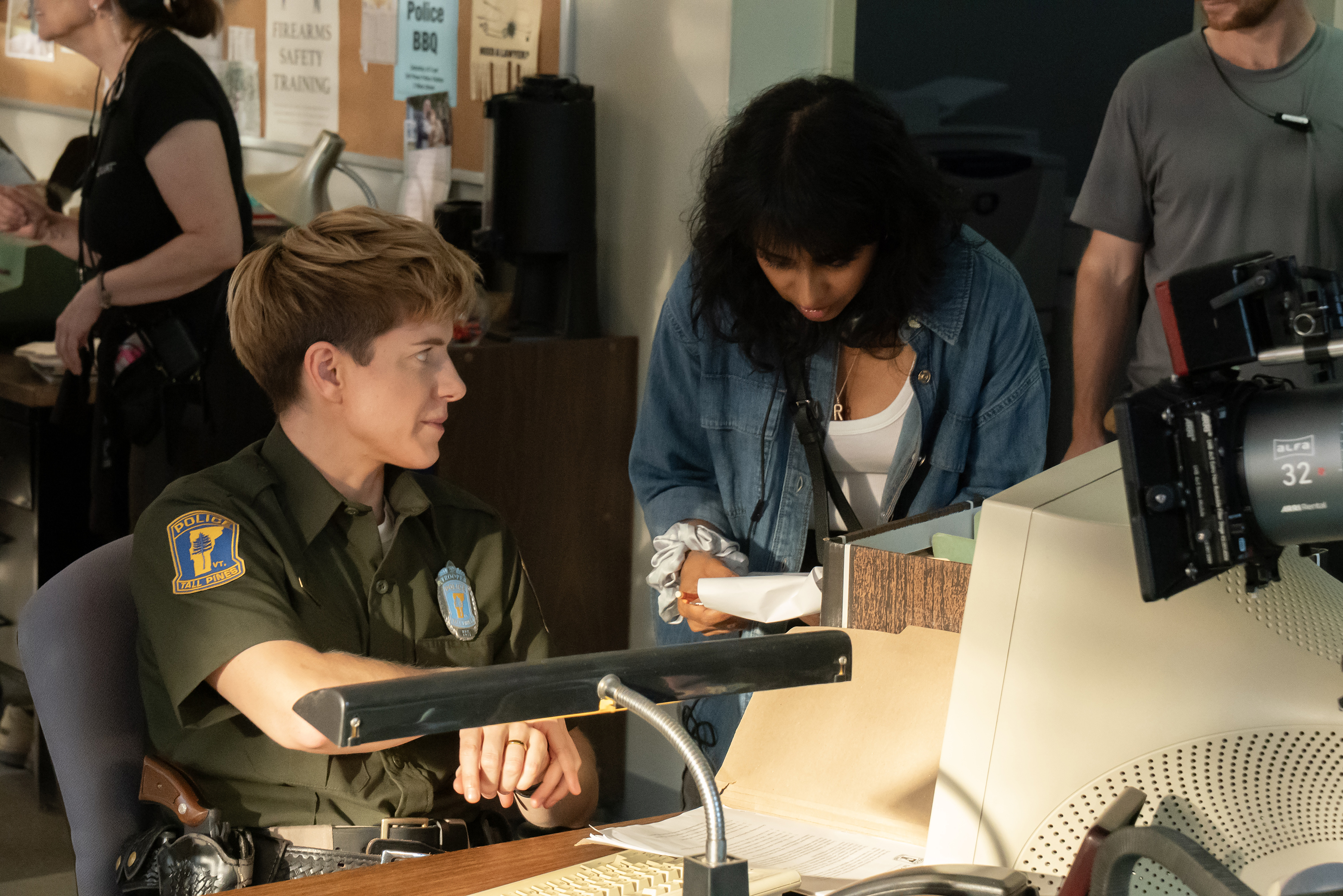
Can you tell us about your filmmaking journey? Did you always want to be a Director?
Director Renuka Jeyapalan: I was supposed to be a doctor – there are a lot of doctors in my family, and my degree is in biochemistry, but I always loved movies. I watched old movies with my dad when I was a kid, and I became obsessed and fascinated with filmmaking. I ended up going to the Toronto Metropolitan University (formerly Ryerson University) night school program, and then I applied to the Canadian Film Centre. Getting into the CFC really changed my life. I got to make a film there that won Best Short at TIFF, but then I struggled for years and couldn’t get my features made. I decided to pivot to TV directing, first by developing my own show as a writer, and eventually, CBC got to know who I was. I shadowed on Murdoch Mysteries, and I was really lucky – Shaftesbury and the Showrunner gave me an episode to direct, and that was my first episode of TV. I’ve been lucky to direct television ever since then, about eight years ago. I also direct my own films, including a feature called Stay the Night.
“There are many different types of actors, and I try to create an environment where they all feel safe, heard and seen. Establishing some kind of relationship or trust beforehand is key.”
-Director Renuka Jeyapalan
As a Director on episodic television, how do you immerse yourself in these established shows that have been running for years and have a very distinct universe?
RJ: I need to feel a connection to the material as a writer myself. With television, I direct other people’s writing and execute someone else’s vision, so I want to bring something to it. With Murdoch Mysteries, one of my favourite movies when I was a kid was A Room with a View, the Merchant Ivory film. I’ve always loved period pieces. That was my “in” with Murdoch Mysteries – “Oh my god, I get to direct a tea party and a ball?!” I think when you connect to the material, it makes you more aligned with the Showrunner’s vision. I’ve been fortunate to work on shows where I always feel that connection. I also recently directed an episode of North of North in Iqaluit, and it was such a blast to shoot there and learn about the community. It was such an ironically warm place, and the cast and crew were a delight. There is some discussion of cultural trauma in the show, because that’s a part of the history of the North, unfortunately, but there’s this wonderful sense of humour, and everyone is so connected. Yes, it’s cold and icy, but the show depicts such a universal small-town experience.
How did you first get involved with Wayward? What about that project “clicked” for you?
RJ: I’m such a fan of Mae Martin, they’re so multi-talented. I was excited when I read the pilot because it was such a different kind of tone and story for Mae, but the series is also about teen female friendships. I went to an all-girls school, so I really understood the intensity of those teen friendships, and I thought I could bring something to the series with my own experience. But Wayward is really about family and friendships, finding your family and putting those relationships under pressure – and that’s my favourite stuff to direct. I love to explore the dynamics between relationships, friendships, and family members.

Cr. Michael Gibson/Netflix
What was your collaboration with Mae Martin like, especially since the story is so personal to them and they’re occupying so many roles in this production?
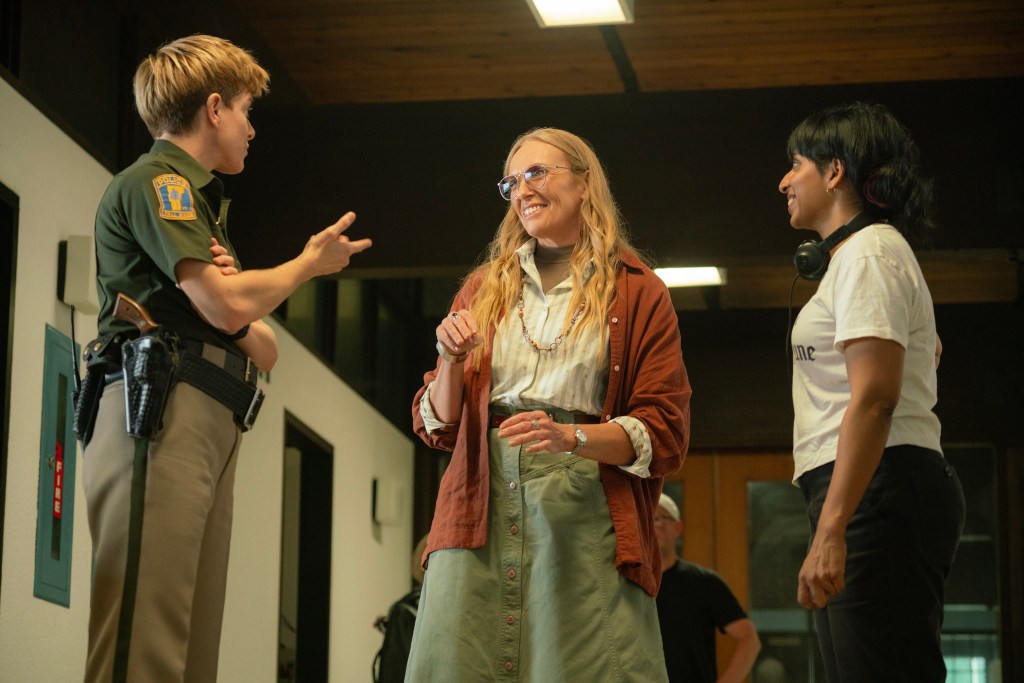
RJ: Mae is very open, and Wayward is quite personal to them. They had written this extensive document about their own relationship with a friend who had experience in the troubled teen industry and shared that with me. I could call, text, or ask questions anytime. During rehearsals, Mae was always available to articulate their vision in a way that was helpful for all the directors, but also wanted us to make the episodes our own. There’s a synergy that can happen when your Showrunner is also your lead actor, because they’re seeing their vision come to life right before them. It was a pleasure to get to know them and help them tell this story.
I also wanted to talk about my collaboration with the show’s Picture Editors, because that was one of the other highlights of working on the show. We had three amazing Editors on Wayward: Gillian Truster, Dev Singh, and Hugh Elchuk, and I worked with Hugh and Dev on my episodes. I always engage with Editors early on in prep, but for this series, I did something new: I would send them voice notes after each day of production. I would talk about the scene I shot, any ideas I had, just my random thoughts at the end of the day. You have less than a week to edit your episode, so it was helpful to get a head start and make sure we’re all on the same page. Some of my best friends are Editors, so maybe that’s why, but being in the editing room with your Editor is one of my favourite parts of filmmaking, and I learn so much from them. I also loved working with Catherine Lutes on my episodes, who’s an amazing Director of Photography. Everyone was invested in this series and what the tone was, so it was a really fruitful collaboration.
Did you have any favourite scenes to direct in your episode?
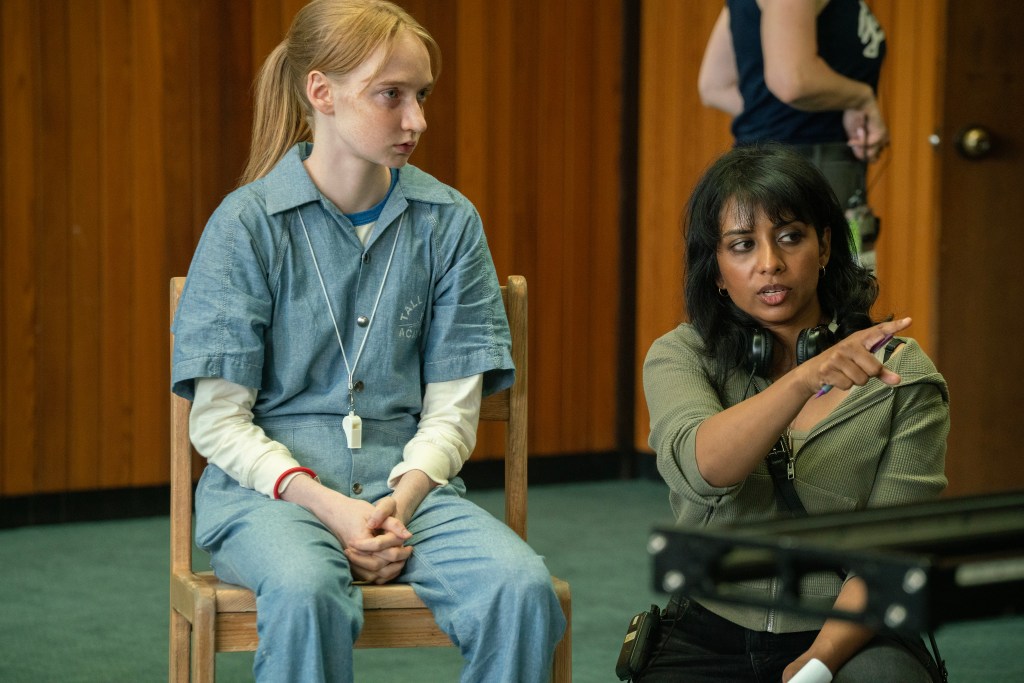
RJ: I had two: one was a group therapy scene with ten of the teens and Evelyn (played by Toni Collette), who’s the headmistress of Tall Pines Academy. On the page, it’s an intense scene, and I knew that directing it would be the biggest challenge for my block. It has three distinct movements, and it changes tone between each of those movements, eventually getting quite dark and disturbing. We wanted it to feel authentic and true to what therapy is like in these schools for troubled teens. Mae shared a document about kids who have been through that kind of therapy, and we really wanted to do justice to the emotions of that experience without it feeling exploitative. We wanted the audience to feel what it’s actually like to be in that room, where it’s basically attack therapy and people are throwing insults at you. Our actors were amazing; I was so proud of how much they gave to that scene, and I’m excited to see how people react to it.
The other scene is at the end of episode three, between Mae’s character Dempsey and Sarah [Gadon]’s character Laura, and it’s just the two of them sitting on the edge of a bed talking about how their day was. That was such a joy to direct, because they were both so amazing and so vulnerable. Mae especially was showing colours that I don’t think people have seen from them. The Dempsey/Laura relationship feels very real, and it was special to be there for that scene.
Cr. Michael Gibson/Netflix
What’s your approach to working with younger actors and actors in general, especially when the subject matter of the scene is so heavy?
RJ: I always reach out to every actor I work with on a show individually before we get to set so I can meet them and chat in person or on the phone. I want to be able to give the actor personal time to talk, ask their questions, or tell me their thoughts. Every actor is different, and my job as a Director coming in on a show is to figure out how they like to work. The trick is, when you have a lot of actors in one scene together, everyone has their own different styles. That was the challenge with the group therapy scene in Wayward. There are many different types of actors, and I try to create an environment where they all feel safe, heard and seen. Establishing some kind of relationship or trust beforehand is key. When you have eleven people in one scene, you have to do the coverage in a certain order, and the people who are doing coverage at the end are exhausted, so you want to pace them and give them time and space. I felt like there was a sense of relief and release after we finished shooting, because it was a long, long scene, but I’m really proud of what we accomplished.
“You’re leaning in and laughing with the characters, then leaning back because you’re scared and don’t want to see what’s going to happen next. Those contradictory emotions are interesting to play with for a Director – how do we land both of those tones and how do they coexist in the same scene?“
-Director Renuka Jeyapalan
What was it like to direct on a series that has thriller and horror elements in addition to drama and comedy?
RJ: I’ve mostly done half-hour comedies and a little bit of drama, but I haven’t really delved into genre. As a film fan, I love it and studied it, and it’s such a visual genre. There are visual conventions and tropes that you can subvert in creative ways, so that was another draw to Wayward, because there are many tonal shifts. It can be a dark comedy at times, and it’s a thriller with horror elements, so you’re leaning in and laughing with the characters, then leaning back because you’re scared and don’t want to see what’s going to happen next. The scary stuff is the tension, and then the comedy is the release. You’re constantly toggling between the two. The comedy starts to fall away as the show ramps up, but it sets the tone for the rest of the series. Those contradictory emotions are interesting to play with for a Director – how do we land both of those tones and how do they coexist in the same scene? The characters are so vivid that you just try to direct the truth, and all that will come out.
Cr. Michael Gibson/Netflix
You’re involved in various programs with the Canadian Film Centre and other organizations here in Ontario. Why is it important to you to give back to the community and support emerging filmmakers?
RJ: I’m always open to talking to emerging talent because everyone’s path is different, and it’s so hard to find your path in this industry. I struggled a lot at the beginning – I had no connections and didn’t know anyone in my industry, I just put my head down and did the work. I do go back to the CFC every year, and I direct the actor monologues in the actor’s program. The CFC did truly change my life, and I’m so grateful to them. I will always go back whenever they invite me to talk or participate in something they’re doing. In terms of mentoring, I haven’t had a shadow on set since before COVID, but as a former shadower, it’s always great to help impart experience to someone else.
What’s next for you? Is there anything you would love to make or direct in the future?
RJ: I’m lucky that I get to write and direct my own features, along with working in episodic television. I’m working on two feature scripts right now and looking to do episodic work that is different than what I’ve done before. I want to feel that challenge, those butterflies when you walk on set. I want to direct stories with a different angle or genre, but still focusing on the elements I really resonate with, like relationships and personal dynamics. These are the themes that I obsess over myself, so I love exploring them in bigger scopes and settings. I would love to shoot abroad too; that would be amazing. But we’ll see!
Watch all eight episodes of Wayward on Netflix on September 25.