


From massive set pieces and ambitious builds to creative problem-solving from every department, The Boys continued to go bigger, stranger and bloodier with each season, all while continuing to test the limits of what could be achieved on screen.
Check out our interview with Production Designer Mark Steel, Art Director William Cheng, 1st Assistant Director Daniela Barbosa and Location Manager Drazen Baric as they reflect on the wildest production moments, the growing scope of the series and the lessons they’ll carry forward from working on one of the biggest and boldest shows ever made in Ontario.
Looking back on your time working on The Boys, is there a favourite scene or production moment that was memorable to you?
Production Designer Mark Steel: I would have to say there were several memorable sequences in Season 4, but a standout for me was Vought on Ice. It was such a thrill to cross into a totally different medium: musical ice performance. I learned a lot about what it takes to put on an ice show while at the same time setting the stage for one of the wildest massacres of the season!

The Boys Season 4, Episode 3, ‘We’ll Keep the Red Flag Flying Here’
Location Manager Drazen Baric: In Season 3, Episode 3, we filmed extensively at Boyd Conservation Park, where we were granted permission to stage a 1984 flashback sequence in Nicaragua for the character of Soldier Boy, played by Jensen Ackles. The sets were incredible, the writing for that particular episode was different and had a really unique flair, and the directing is by far some of my favourite. The entire sequence does not disappoint! It is also my understanding that the sequence was almost dismissed and cut from the script or episode by the studio. It’s perhaps one of the best episodes of the five seasons.
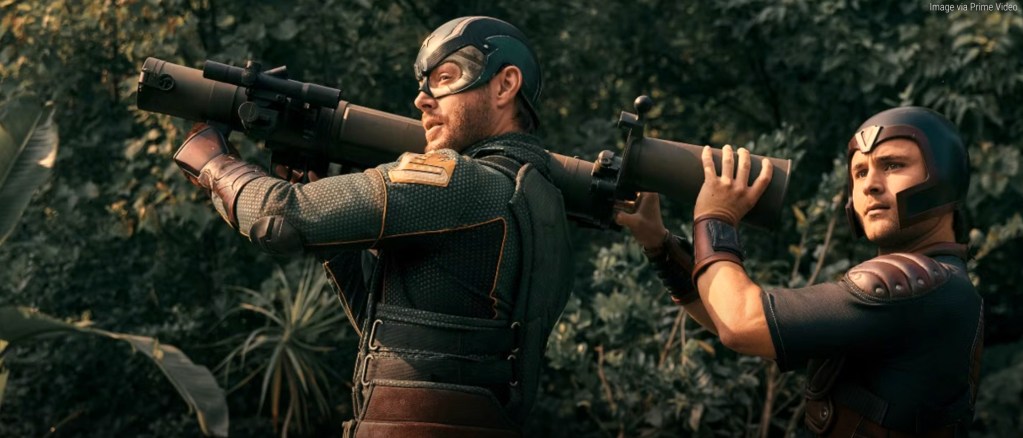
The Boys Season 3, Episode 3, ‘Barbary Coast’
Art Director William Cheng: It has to be the 30’ x 16’ x 12’ penis we had to build in Season 3. We had so many crazy pre-production meetings and Zoom calls about this build with Ron Stefaniuk (of Stefaniuk FX Studio) and Eric Kripke (Showrunner). All these serious people sitting around a table talking about the colour of the head, whether it was circumcised or not, whether we see past the glans, if it was veiny, and if so, how much veining, colouring and texture. It was just hysterical, and never a dull day in the office. In fact, with so many “reference” pictures and pieces of concept art being emailed back and forth, all our Gmail accounts started sending us dick ads for months afterwards!
We also had to build about 35 feet of urethra inside the head, make it out of a soft translucent material that we could light through, and have it mist with moisture. We also projected playback of pulsing blood vessels practically onto the translucent walls.
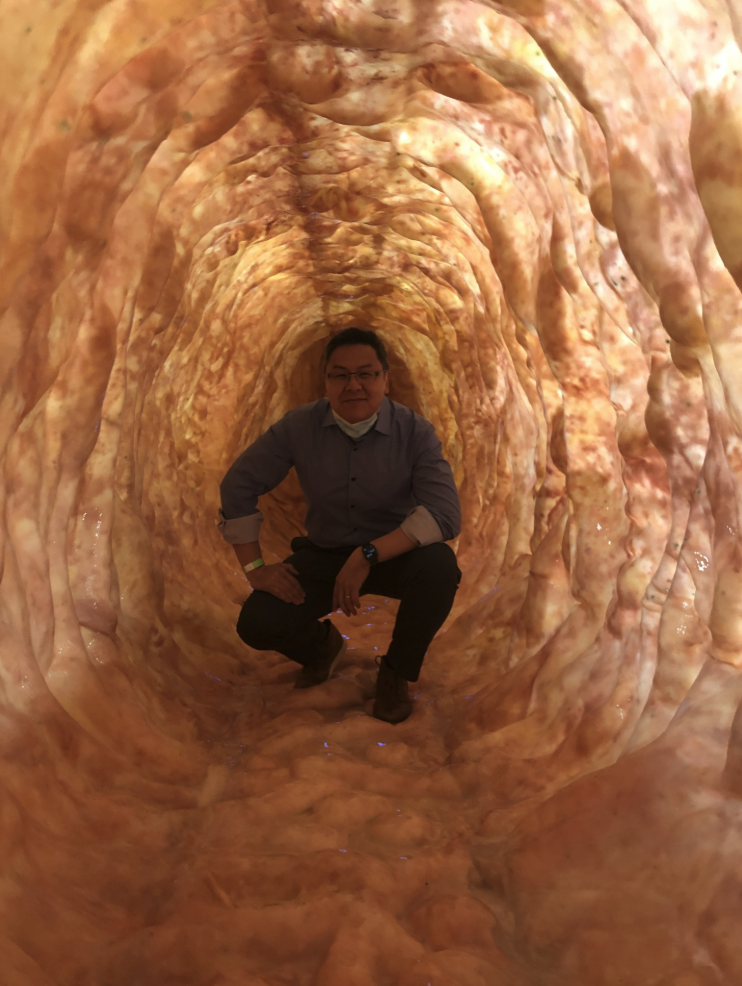
Art Director William Cheng on set (Season 3, Episode 1, ‘Payback’)
1st Assistant Director Daniela Barbosa: There are too many to pick just one. Mystic Unit ran at a pace where something wild happened every week. A few things I’ll never forget: Director Phil Sgriccia’s annual unit hats, which became so coveted that crew would find ways to get assigned to us for even a single day just to earn one; the production office running 7 a.m. to 10 p.m. like a war room; and shooting a July scene in November. We arrived at 5 a.m. to find the Kenny family’s special effects crew at Dynamic Effects Collective had been out all night melting snow with blowtorches. That’s the show in a nutshell: if Eric Kripke could dream it, every department would find a way to make it happen.
From your perspective, how did the scope of the series change from the beginning to the final season?
William Cheng: I started on The Boys with Production Designer Arv Grewal, whom I first worked with back in 2002 on Bulletproof Monk. It was fantastic to collaborate with him again. Unfortunately, he passed away during pre-production on the third season of The Boys, which was a big shock to our Art Department. Amidst that chaos, we found our footing. Because every day was a fun, outrageous new thing to think about and solve, it distracted us from what had happened.
The scope was always huge relative to our budget and schedule, and it was always a challenge to pack as much as we could manage given the time and money we had. On top of that, we were one of the first shows back after the COVID pandemic, so we had to completely change how we handled everything and learn the new normal. By the fifth season, we knew what we were in for. It takes a certain type of individual to stomach the blood and gore, but also to roll with the punches that this fast and big production demanded. What started as outrageous, crazy satire turned into a reflection of society and American politics. Luckily, I was surrounded by an incredible team, without whom none of this would have been possible.
Mark Steel: To point out the obvious, The Boys has brilliantly maintained the subversiveness from its origins through to an uncanny parallel with the state of affairs in the world today. It is not often you get the opportunity to be part of a story that is both hilarious, irreverent and disturbingly prescient all at the same time. It was thrilling to play a role in something that is so resonant in our culture today.
Daniela Barbosa: In Season 1, we had incredible previs work from Stephan Fleet (VFX Supervisor) that gave us real precision. You could solve problems before you were standing in a field at 5 a.m. In Season 2, we took everything we had built and just made it bigger. Each episode kept trying to outdo the last from day one. Working on that show was not for the faint of heart, that’s for sure!
Drazen Baric: The expectations were set higher for everyone every season. Every aspect of every episode kept pushing and challenging us to increase our creative levels. More variety of locations, more stunts, more blood!
How did working on this show influence your work and career? What did you learn from it?
Daniela Barbosa: Working on The Boys raised my standard for what’s possible when a crew is genuinely excellent and fully committed to the work. The creative problem-solving I witnessed and participated in on that unit is something I carry forward every single day. I’m so grateful to everyone who had me aboard.
Mark Steel: The Boys will remain a career highlight for me. The quality of The Boys stems from the ability of the crew to meet the ask, and I’m proud of my entire Art Department for their dedication and hard work.
Drazen Baric: For me, I was just happy to be a small part of a well-written and well-executed show that held the attention of so many people globally for five seasons!
William Cheng: The Boys taught me to take a step back and breathe. Look at the bigger picture and don’t get caught in the weeds. You are only as good as your department and the great people you surround yourself with. It was a tremendous opportunity to do a lot of fun and different things, from a giant penis to a giant human-sized Barbie playhouse before Barbie the movie, to a talking mechanical hammerhead shark in Lake Ontario. It’s never a boring day in the Art Department of The Boys!
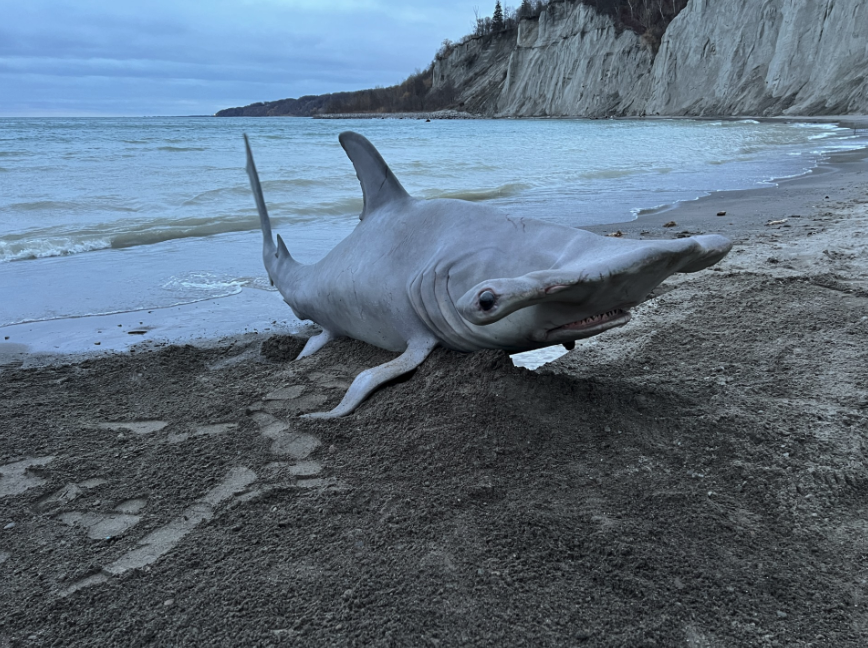
Photo courtesy of William Cheng
Watch all five seasons of The Boys on Amazon Prime Video.
For more behind-the-scenes stories from the set of The Boys, watch our video interview with Production Designer Mark Steel and read 1st Assistant Director Jason Washington’s interview with The Boys 1st AD Jack Boem on The Wider Lens.


