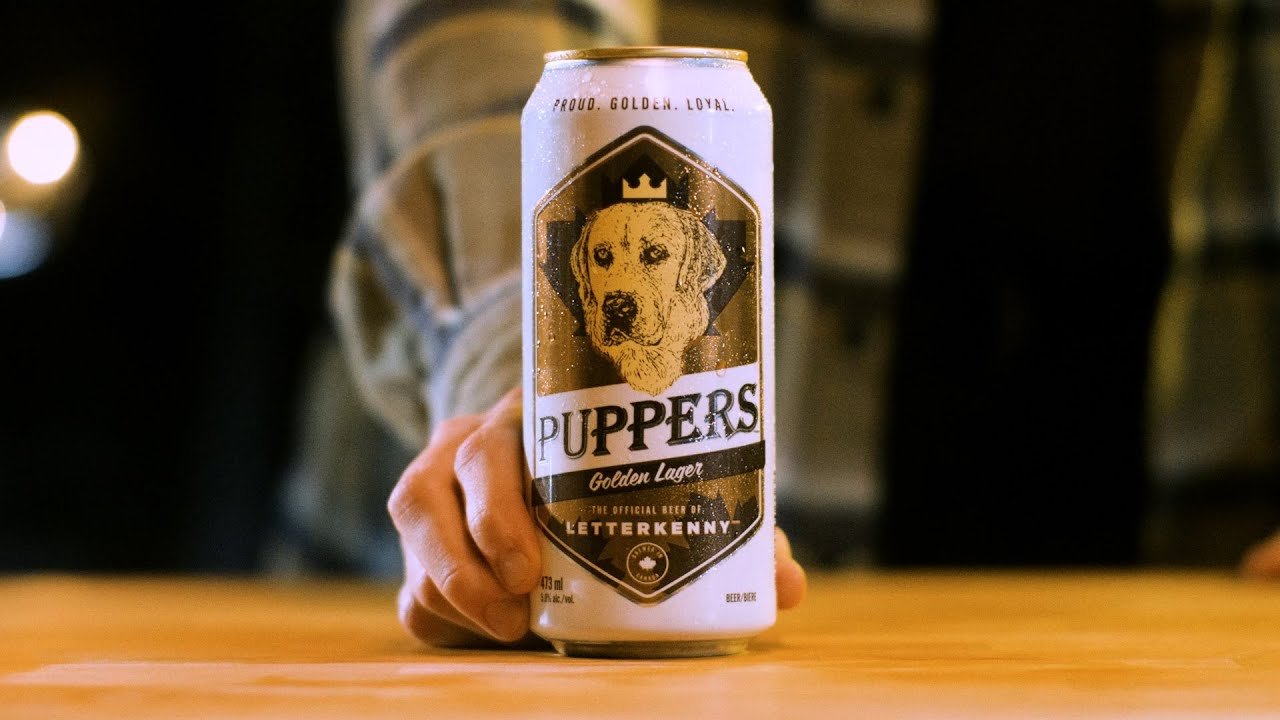
Grab a bottle of Puppers and check out our interview with Director Jacob Tierney, Production Designer Matthew Ellis, Sound Editor Jason Perreira, Picture Editor Drew MacLeod, 1st AD Alex Champagne, Production Manager Brendan Brady, Location Manager Craig Rose and Assistant Location Manager Jason Lloyd as they reflect on the impact of 7 years of Letterkenny and how it helped put the Northern Ontario film & TV workforce on the map.
How did you first come aboard Letterkenny?
Director/Actor/Executive Producer Jacob Tierney: It was a total blind date – I was sent the materials by Mark Montefiore and just loved them. So I had a drink with Jared Keeso (Letterkenny writer, creator and star), and the rest is history!
Production Designer Matthew Ellis: Season One I was acting as Prop Master, and at that point in my Props career, I was trying to shift to the Art Department. But at that time, I was a one-man show. We didn’t have any Buyers or Assistants. But when Season Two rolled around, they contacted me and offered me the job. They liked my attitude on set; they liked my input, and they enjoyed my leadership. They provided that opportunity by taking a chance on me, and I seized it! And it was an amazing growth experience on Letterkenny.
Sound Editor Jason Perreira: I was contacted by the team in the second season of Letterkenny, and they asked me if I would come aboard and supervise the show. My wife, Stacy Coutts, is also a DGC Ontario Sound Editor, and she came aboard as well. It was a good fit for us, but the real draw for us was Jared Keeso and Mark Montefiore and how they conduct business and treat their crew. We don’t take every project on, but we take the ones we think are particularly important. Telling Canadian stories is important to us, so it was a perfect fit. We don’t work together often – our schedules cross in weird ways, and she’s full-time at Formosa right now with Jane Tattersall while I’m still freelance. But this show is very dear to us, and I think we were contacted because we have a reputation for taking good care of the show. We’re very loyal to Jared and Mark. They’re like family.
Picture Editor Drew MacLeod: It’s actually a really funny story. I applied to Letterkenny the day after I was accepted as an Associate Member of the DGC in 2015. I checked the “Hot List” (aka DGC Ontario Production List), and I saw Letterkenny Season Two was going to go to camera. I thought, “Oh, I like that show. Maybe I’ll just contact the Post Supervisor and see if they’re looking for an Assistant.” Sure enough, they were. Long story short, they brought me on as an Assistant on Letterkenny Season Two, and that is how the journey started for me. I worked on Season Two onwards, and then when Season Four came around, one of the Picture Editors left the show. That presented an opportunity for me to throw my hat in the ring. Even with no TV-cutting experience under my belt at the time, the team was super helpful in allowing that promotion to happen. I’ve cut 30 episodes of Letterkenny now, all the way up to the finale, and it’s been it’s been a pretty crazy ride. It really is a tight family. Even being on the Post side of things working in Toronto, you can really tell that it’s a close family unit. Everybody takes care of everybody. We even have family that work on the crew, like Matt Ellis (Production Designer) and his sister-in-law Dani Ellis (1st Assistant Art Director), and Jason and Stacy. There definitely is some big-time family love in the whole crew for Letterkenny, and I think that’s what makes it so amazing. It really begins and ends with Jared. He’s so fond of the people he works with. And why switch it up if it’s working so well? I think that’s pretty spectacular.
Location Manager Craig Rose: I started on Season One. It’s a long story, because a Producer, Greg Copeland, approached me to manage the show, and I wasn’t in the space to manage a show at that time. So, I was the Assistant Location Manager for Seasons One and Two. Then Jason and I were doing Bad Blood in Sudbury, and Chris Danton was the Production Manager. Chris had been tapped to do Season Three of Letterkenny, and he asked me if I would be the Location Manager. Obviously, with Chris at the helm as a former Location Manager, I was very comfortable taking on that role. Chris Danton gave us the nod, and then we took off from there and never looked back. I have no idea how many seasons it was, but it was seven years.
Assistant Location Manager Jason Lloyd: I came aboard the show because of Mr. Rose here. My first gig ever was an LSP working with Craig on a show in Sioux Sainte Marie in 2013. Mr. Rose dropped me off on the side of the street and said, “Watch cones.” After that, I did a short stint with Malcolm McCulloch for Vikings. They shot four or five days of Vikings in Sioux Sainte Marie. Shortly after that, Craig got in touch with me to let me know that this show, Letterkenny, was happening, and he asked if I wanted to come on board and do this show with him.
Production Manager Brendan Brady: I came on in 2019. It was Season Eight or Nine. I’d been working on a feature film in Ottawa, and I heard they were looking for a new Production Manager. And then somebody asked if I’d be interested, and I said, of course. I came on for Season Eight, did my first block in the spring of 2019, and absolutely loved it. Kara Haflidson, one of the Producers, thought maybe she’d only have me for a season, and I was like, “No, you’re never gonna get rid of me.” You know, it’s funny, the first year I started production managing was the year they did the first season, and I got my big break by going to Northern Ontario. I was up in Sioux Sainte Marie and everyone was just gushing about this new show that they had been on and how much fun it was. It was the ‘talk of the town’ in Northern Ontario.
1st Assistant Director Alex Champagne: At the time, I was working in Vancouver on another series out there, and I got a call from Billy Gridley, who is a good buddy of mine. He was 3rd AD on that show for two years at that point. He asked me if he could pitch me to be the 1st AD on the show since they were looking for a new 1st AD at that time. So I said yes, and he convinced Jared Keeso and Jacob Tierney, who are both great guys, to give me a call. We had a really positive and funny conversation. The chemistry felt great, so I decided to take the opportunity. It was actually Jacob who decided to take a chance on me and gave me the opportunity. My partner and I were both working on a TV show in Vancouver and we both ended up working on Letterkenny.

How have you seen the show grow and evolve over the past seven years?
Jacob Tierney: We got lucky with an amazing cast. So we just dug into them, writing to them, giving them fun things to do. We got very lucky with our crew, too, particularly Matt Ellis, who started as Props and ended up being our Production Designer. He’s an enormous wealth of talent – Jared calls him “Good Ideas” Ellis.
Matthew Ellis: In the early seasons, the show focused on the small clips in town and giving us windows into that world. But with every season, the cast expanded, the world of Letterkenny expanded, and the brands we created expanded. Slowly, over time, we had all these tools in our toolbox to flesh out an entire universe, even though it’s creating a world people are familiar with in small-town Ontario, but it goes beyond Ontario. I feel that many small communities, especially in Western Canada, really connect with the subject matter and the experiences in the show. Aside from the really deep cut, Canadian pop culture and societal references we often see in the show, a lot of rural communities worldwide really understand what’s going on, even though the language is slightly different. It’s all the same.
Jason Pereira: They started with very little in terms of budget, scope, and production. They got the job done in an incredible way, but with limited resources. It has definitely scaled up, and I think they were able to attract more talent while still keeping the charm of the show intact. Maybe they have time for more setups and more shots, but they’re still shooting rather ambitiously. For me, the hockey games are the toughest. I have to cut every foot skate, every puck against the board after the cut, and every single body check. So I think the scale has grown regarding what the scripts are willing to do. But I still think it’s still very much the same show, and it was very much the same show right up until the end. I won’t give anything away, but the way it ended, I cried like a baby. It becomes part of your own world. You root for these people to do well, and they ended the series so eloquently.
Drew MacLeod: What I’ve seen the most, and this is because I work with Jared so closely, is his confidence in the way he writes the scripts. It’s always an exciting day when the scripts come in, and we all get to read them. One thing I’ve noticed, having read so many scripts of both Letterkenny and now Shoresy, is that Jared writes them from a technical standpoint in order to nail down exactly what he’s after. He is very specific in that sense. He’ll write certain things into the script, like Editor’s notes and little tidbits of information that will help the Camera team. That’s one thing that’s really evolved over time. I just think the show has gotten so much funnier, honestly, and that’s coming from somebody who watches it way too many times before the episode is complete. He’s just zeroed in on his unique style. It’s one that people have never really seen before or we might never see again.
Craig Rose: We started out working from three rooms and an ATCO trailer, and moved up to one of the biggest units I’ve ever seen on Season 12. I’m sure Jason can chime in on that.
Jason Lloyd: Like Craig said, it started very small. I think we had maybe two cast trailers, and hair, makeup, and wardrobe were inside an ATCO trailer. The locations have changed, but over the years, we really got to know everyone we were dealing with, and every time we came back, they were always happy to have us. Every year, there’d be something out of left field, like an exterior lighthouse or something, but we always figured it out. We reused a lot of the same locations in creative ways as well. We’ve got our anchor locations. For example, there’s a farm just down the road that we probably used at least once a season. Then there’s the produce stand set, and we would always find some creative way to utilize that space. Even when we had to find a house down the street, everybody in that neighbourhood knew of us; they knew we were coming, and then eventually, the whole block knew us after so many years.
Brendan Brady: That first season back after the pandemic was so challenging for a whole host of reasons, as you can imagine. We had to make a big pivot in terms of our schedule and cut a couple of days to ensure that we were going to be okay if anything COVID-wise happened. The entire production team came together and worked very hard to figure out how to make those changes work. What’s so amazing about this crew is everybody loves coming to their job. Everybody did such a good job every day, and they would roll with the punches.
Alex Champagne: I find Letterkenny evolved to what it needed to be over time. Let’s say we had about 20 days to shoot seven episodes. In the beginning, we had maybe four to ten cast members on an average day. And then, in the later seasons, we might have 12 or even 24 to 30 cast on set. Being a location show, we have to work around their availability, location availability and so on. It was definitely a challenge to schedule that many people in that much time. But we always made it work, and it was easy on my end because Jacob is so open and flexible.
Are there any specific challenges or benefits to working on a show up North?
Matt Ellis: Challenge is not a word I connect with because everything we do is just solving those challenges. It’s what I live for. But we don’t live in a large urban area where we have those prop shops you can just walk into, and everything we could ever dream of is sitting on a shelf for us. It comes down to the strength of our people who work on the show because they’ve been here in northern Ontario, they have the connections, and they know the person or organization who might have what we need. It allows us to make tighter budgets work, whereas the cost of prop shopping at a prop shop can be high. We’ve had challenges recreating carbon copies of locations for later use as shootable sets. Stewart’s basement was a location that eventually became a set. The farmhouse also turned from location to set. I’d say that the farmhouse is my favourite set, from design to how it came out on camera. The ice fishing hut from Season Three was perfect. I can’t even describe how happy I was with how that came out and how we created a small condensed space but still captured the signature Letterkenny wide shot. As far as our Art Department, we take great pride in creating Puppers Beer for Season 2. Everyone wants a Puppers. We’ve had the pleasure of not only creating that beer and that design but secretly marketing it through the show. We’ve had eras of catchphrases, creating this larger picture of a beer that doesn’t actually exist in the real world but has existed in the show’s universe for decades.
Drew MacLeod: The process actually isn’t very challenging for us in Post. Typically, we get the dailies the day after they shoot, so we’re working pretty much in tandem with the shoot the day after they wrap. That’s our last day of dailies. And then we just work through Post from there. The block shooting isn’t necessarily challenging for us. We’re very lucky because they don’t shoot a ton on Letterkenny. They never really did. But that’s because I think Jared and Jacob always knew exactly what they wanted. That’s a testament to how good of a team they put together and how well the entire crew, specifically Jared and Jacob, work together as a Director and Showrunner duo. When they got it, they got it. There were never many reshoots needed, simply because they were confident they got what they needed, whether two or four takes.
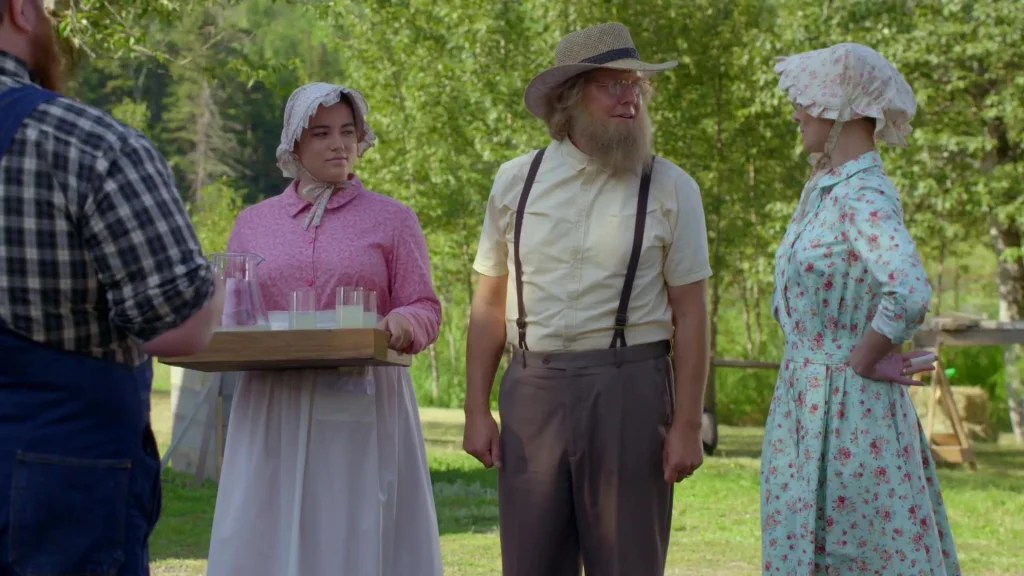
Craig Rose: Sudbury proper covers a huge area. We did have a lot of locations that were far apart, and sometimes they were on the same day. I’m not sure if we’ve set the record on this show for the furthest locations on the same day. That’ll always be the challenge in Sudbury, as opposed to North Bay. There are not a lot of proper farms in Sudbury; they’re tough to find now. So, we did find one of the few good farms. Fortunately, we built good relationships with that family. We went to see them at Christmas and went to their mother’s funeral. We were like a part of their family for the seven years we did this. But I spent a lot of time driving around to find exactly what we were looking for. A good example would have been when we were looking for the Dyck farm in the episode with Jonathan Torrens, who played the Mennonite husband, Noah Dyck (spelled differently than the body part). I’d been trying to get into that place for years. Finally, the gentleman who had lived there had to go into a home, and I got a call from his son-in-law, saying that he’d found about 15 of my scouting letters in the kitchen drawer and wanted to call me.
Brendan James Brady: I think the hardest thing to deal with in Northern Ontario is that, unlike Toronto, where it’s one centralized location, you’re dealing with multiple regions you could shoot in. Letterkenny did a great job of hiring a majority of Northern Ontario crew. But that doesn’t mean they were the majority from Sudbury. Some were from Sudbury, like Matt Ellis, an amazing, homegrown talent. But many people were coming from North Bay, some from Timmins, some from Sioux Sainte Marie, and a couple of people from as far as Thunder Bay. I think the biggest challenge is that many resources are put into travel and accommodations. But compared to a vendor perspective, it’s not the end of the world. We worked it out easily. You’re doing runs every day, especially because Sudbury and North Bay are both relatively close to Toronto, so we can run tasks down every day. Our offices were in a town that’s technically not one centralized town. It’s six little towns that have been amalgamated. For me to drive from where I was staying into the office was 30 minutes each way, but it took almost an hour to get to our studio because it was so far up. It was in this little town called Capreol. So, the driving is just endless.
Alex Champagne: Depending on what city a project is shot in, even if a project is up North, you might not be living at home. The weather, especially in late fall and winter, can be brutal. It is a lot colder, and there is much more snow than working down South. We don’t have access to the same resources as shooting in the city. There are rental houses, but if a particular piece of gear breaks or needs to be ordered on the fly, it’s an 8-hour round trip to Toronto. We don’t have access to proper studios and sound stages yet. Since they’re smaller cities, there aren’t as many location options to scout or shoot in, and then there’s travelling and accommodations for the cast to consider, which can make rescheduling trickier. It’s a talented and skilled crew, but we don’t have the same labour pools. This can sometimes be an advantage and disadvantage. And, of course, there are fewer catering options. As for benefits, though sometimes things may be distant, you don’t have to deal with the same amount of traffic. You can usually be home soon after wrapping. Also, the North is beautiful. It’s a beautiful place to shoot, especially in the summer.

How have Northern Ontario communities received Letterkenny, a show about Northern Ontario and the rural way of life?
Jason Perreira: I have an interesting life experience myself. I grew up in Malvern in Scarborough. My parents are from Guyana, so I’m a first-generation Canadian. I had that whole urban experience in Scarborough, and then my dad got a better job when I was in high school, and we moved to Aurora. That was a massive change for me, but I got to see this rural life. I went to the bush parties and the junior hockey games on Saturdays. I’ll visit friends back in Aurora and Newmarket, and I can’t tell you how many Letterkenny T-shirts and hats I see. I have a lot of friends in various small towns, and they feel like every part of them is being represented. It’s not just the hockey players. The marginalized people in those communities feel like they’re also being celebrated. We don’t make fun of people on the show; we celebrate everybody’s differences, quirks, and the diversity that goes into making a community. From a Canadian perspective, I’m so happy and proud to be working on the show. When I’m asked to sound design a bush party with fireworks out by the lake, I know exactly how that sounds. I lived that life. The people on Letterkenny are instantly relatable, and there are no rock stars in this show. Nobody is perfect. It’s not like opening Vogue magazine and being like, I will never be these people. But these guys? I went to high school with these guys.
Drew MacLeod: I remember telling people about the show when I worked on it in the early stages, like seasons two and three. Just to be modest, I remember telling people, “Have you ever heard of this show Letterkenny?” and it was usually 50/50 people who had or hadn’t seen it. As the seasons went on, I didn’t feel the need to say, “I work on this show called Letterkenny,” I would just say, “I work on Letterkenny,” and over time, the reactions to telling people would just get bigger and bigger. People would be like, “Oh my god, I love that show. I’m such a huge fan,” and that made me realize it was having an impact all over Canada, the US and the world.
Craig Rose: I’ve talked to many people about the show, from teenagers to people in their 80s. You would think it would appeal more to a younger audience, but I spoke to an older gentleman who told me it was the funniest thing he’d ever seen. I’ve talked to other people who told me they grew up in communities outside of Sudbury, and that’s exactly the way it was. All sorts of different age groups and demographics of people are into it. It’s not for everybody, but it is made for everybody.
Jason Lloyd: If we’re scouting somewhere, and I give them my business card and tell them I’m with Letterkenny and we’re looking for a location, they’re all excited about it. It opens doors for you, being a part of a show that doesn’t take itself too seriously. I’ve always found that the crews on Letterkenny have been some of the kindest people I’ve ever worked with. One thing I saw in Season One that blew me away was that everyone was happy and excited about the project they were making. Everyone loved coming to work, and then that just carried on every year afterwards. It’s one of the most relaxed sets I’ve ever worked on and one of the most well-organized.
Alex Champagne: I think some smaller towns in rural areas can identify themselves in the world of Letterkenny. One of my cousins lives in rural Eastern Ontario, and he adored Letterkenny. He mentioned how he had a neighbour that was exactly like Wayne down to the T, and he was very excited about seeing hicks on TV. I know on the oil rigs where he worked, everyone started using Letterkenny slang. Once, while we were filming, a couple randomly pulled up to the farm. They had travelled from the far North of Northern Ontario and were on their honeymoon, looking for the Letterkenny sets and found us. This show was so special to many people in small communities, and it allowed them to see themselves portrayed on TV for the first time, even if in caricature.
How do you think Letterkenny has helped the Northern Ontario film industry evolve?
Jacob Tierney: We were up in Sudbury in the early days. I think we made a very positive impact, providing many people with work and job experience, which isn’t always easy to come by.
Matt Ellis: The economic spin-off of the industry has always been a real benefit to the Northern communities. The NOHFC (Northern Ontario Heritage Fund Corporation) delivered on what they set out to do with that funding stream. Personally, I don’t want to go live in Toronto to do this. The fact that I’ve been given the opportunity not only to work on movies and television series but also to build a long-lasting 16-year career at this point has been amazing. When I was in Props I helped organize the IATSE local up here. I felt it was necessary; I want to see that infrastructure continue to grow and provide the community with fulfilling, creative, exciting careers. It’s wonderful. But even in Northern Ontario alone, the jurisdiction is like the size of Utah. It’s massive, and you end up working in beautiful remote areas. There’s always a lake nearby, that swampy swatch of bush we need or that long, beautiful fence line. We have an extensive repertoire of environments.
Jason Perreira: We have the opportunity to deal with some people up North that we would never have the chance to deal with before. If they can keep this going, they can have an excellent, tidy little industry up there. Down here in Toronto, it really is the centre of production. We’ve been doing this for a long time, and much of the industry is built around it. Especially with Post Production, there are a lot of great ADR studios here, and mixing comes up here. I would love to see Northern Ontario take that ball and run with it. I would love to go up there sometime and help them develop the Post Production side. There are so many pieces that are required to do that successfully. I think it’s happening, and I would like to see it happen even more. But it’s hard. How many other shows shoot there? We work in a very volatile business, and there are businesses down here that can absorb that volatility. I don’t know if there are businesses up there that can absorb that volatility just yet, but I would love to see it.
Drew MacLeod: I actually got to go to the final wrap party last October. Usually, the Post guys can’t get out to the wrap party because we’re working, but I made it out to Sudbury that time. I talked to a lot of the Sudbury crew out there, and they said Letterkenny coming out here for them is life-changing because the industry is getting busier. Letterkenny was a big part of making that happen because it demonstrated the amount of serious talent up North, and it is worth bringing your shows out here to crew. Many of them were so thankful to New Metric and Jared for giving everybody a chance and making Sudbury their home, not only for Letterkenny but for Shoresy, too. I’ve also talked to Jared about it, and the feelings are very mutual. He feels there’s nowhere better to film his shows than Sudbury, and I think he’ll only ever leave if there’s a location-specific thing he needs to do. But Letterkenny has really put Sudbury and North Bay on the map.
Alex Champagne: It certainly brought attention to the film industry up North, being its first long-running and massively successful show. I know that many BG would travel from out of town to be on the show, and any BG on the show was always so happy to be a part of it and was really into it. I feel like Sudburyians were proud that Letterkenny was shot there and more so now that the Letterkenny Universe has evolved into Shoresy, which is shot in Sudbury and portrayed as Sudbury.

In terms of your own career, do you think Letterkenny helped you evolve professionally?
Jacob Tierney: Definitely. Directing isn’t something you get to practice a lot, so getting to make that many episodes of TV has been huge for me!
Matthew Ellis: The learning curve was more about stepping back. From the onset, I was always the person solving the problems within minutes of hearing them, rushing around, finding an item or tool to make it work. It earned me the nickname “Good Ideas,” although it’s been shortened to “GI” now. Part of my growth was stepping back from that mentality of being the one who does everything, and now I’m meant to be this brain in the background. It was definitely a challenge, but I am a person who puts a lot of trust in their team. Not only do I want to rely on them, but I also want them to have the same opportunity I had to put those personal touches into the show. Jared and Jacob were amazing, and I was almost shocked by the level of input I had early on when I first took over. It was great to be able to steer the ship and make sure everyone felt that they were a part of it. Not only did our team grow, but the relationships on our team grew. We became much like a family and knew everyone’s strengths and weaknesses. Over the last few years, especially when we transitioned into Shoresy, I’ve switched over to really coaching the team. We have our wins and our losses, and we’re coming up against challenges, but it’s about embracing people’s abilities and making sure we can execute what management wants for the team. I’ve never been shy, even early on in my career. I earned that “Good Ideas” nickname early on because I’ve always been nearby with an idea that keeps the ship moving or elevates a joke. I’ve always had a knack for it.
Jason Perreira: I’m so happy to be working with people like Jared, Mark Montefiore, and Kyle and guys like Duncan Christie. If you have a great show and a great crew to work with, nothing beats it. It’s hard for me to do other shows that don’t have these qualities. Mike King, the 1st Assistant Picture Editor, is my absolute favourite Assistant Editor to deal with. A show lives or dies on the quality of its Assistant Picture Editor and their ability to turn those elements over properly to the Post Production facilities. We freelancers are putting our hands on those elements before the show gets made. And Mike King is one of my favourite colleagues I’ve ever had the pleasure of working with; we feel so supported. And I loved working with Cody Partridge, the Music Supervisor.
I’ve learned it’s essential to take on great shows, but it’s even more important to take on shows that have great crews. I’m standing on the shoulders of giants all the time, so my contribution compares to the mass contribution of the show. Of course, I’m not a writer, but as Editors, we deliver on what’s written in the script. There’s quite a bit of toilet humour and stuff like that in there, and it allows me to try to be funny. I’ll try new things, and even if the team doesn’t like it, they’re always happy that we’re willing to swing for the fences. I’m a professional, and I don’t have any egotistical association with my work. My job is to make you happy and to protect your show. Stacy does the dialogue and ADR, and I do the effects and the music. Stacy always had a great time with the actors in the ADR room. All the actors and Jared are especially willing to go the distance to make the show work.
Drew MacLeod: Letterkenny has been everything to me. It not only started my career as an Assistant and then a Picture Editor in the DGC but it’s given me the confidence to realize that I can do this. It can be a tough industry to break into, let alone as a Picture Editor, and for me to be able to do it within two seasons was huge. So when I say it’s everything, I mean it. I didn’t realize how much things would change for me when I applied to the show back in 2015 and how long we’d be doing this. With that in mind, Letterkenny might be the greatest thing I ever worked on. I was a fan of this show before I even came on, so to say I got to work on 90% of the show is a real honour. It’s a great privilege, and I don’t know if I’ll ever get to do something like this again.
Brendan Brady: I cannot describe how much it has influenced everything I’ve done and will continue to do. I started doing feature films like many of us, mainly Canadian independent films. It was a great experience, and I learned a lot, but the difference between working in television and working on a feature film is it takes almost the entire film shoot to get well-oiled. Then you wrap, and it’s like, “I guess that’s it. See you guys later!” I’m sure anybody who works in television feels this way. But to me, to have the opportunity to work on a show that was already well-oiled and continued to improve each year was such a gift, especially in the film business, where you’re constantly working with new crews and trying to build a rapport. Getting to learn and grow as a team was amazing, and I’ll take that lesson with me for the rest of my life.
Alex Champagne: As far as my evolution and innovation on the show in my role, I incorporated stretches into our morning safety meetings, ensured there would always be an ample flow of Club Soda, and ran a set timer on smoke breaks, including the “one dart warning” of five minutes and “half dart warning” of two minutes. Jokes aside, I would find efficiencies in scheduling and running sets over the seasons as production requirements grew with less time to shoot. Other than that, I would say my most significant creative contribution was with the background work and really trying to incorporate them into parts of the joke, especially our returning BG that we would see in Modean’s bar, the degen characters from upcountry or the gym set. I was allowed a significant amount of freedom and creativity with the BG. I also enjoyed the musical montage slow-motion sequences we would shoot. Working with the large crowds in those types of sequences was very satisfying, and I think the main way I contributed to and elevated the show creatively. Definitely in terms of the scheduling as well, because of the tight timeline and the amount of pages we would shoot in a day, and the amount of cast we’d have on set and background and stunt performers. I really got to refine that skill, including rescheduling on the fly if things would happen.

Do you have any favourite memories of your time working on Letterkenny?
Jacob Tierney: Honestly, it’s a bit of a blur. But I’ll tell you something I love so much – our bloopers.
Matt Ellis: I always like looking back to the Uncle Eddie’s Trust episode, when the townsfolk come to pitch their ideas for what Wayne and Katy should use their inheritance for. When the hockey boys come with Tyson and Joint Boy, they have a pitch for an MMA training house where young boys will get together, have drinks, and wrestle with each other. Wayne and Katy feel that it’s kind of a fruity loop idea. But on the poster board, there’s a photo shoot of two young guys slowly falling in love through the art of MMA, and I’m one of those sweaty boys fighting on that poster board. Prepper, who is one of our carpenters, and I got together for that photo shoot, and it was a very funny Vaseline-covered experience. I like getting involved in the jokes and making sure we hit them home for the audience.
Jason Perreira: I’ll tell you this inside story. It was one of the best feelings I’ve ever had. We had just gotten on the show, and it was almost like an audition because they were taking a chance on us sight unseen based on our resumes. We got to the playback, and it’s going well. I think we’re very good at interpreting the script, sound-wise. We got to the end of it, and there were no notes. The whole room started clapping, and it was a great feeling because we wanted to be on this show and so badly wanted to represent it. And there was one “Nope.” The show sometimes has fart joke sequences, and I consider myself a maestro of cutting farts now because I have become such an expert at it. But at the time, Jared was not entirely happy with it. And you’re on the stage, in the mix, which is a high-pressure situation. I was asked to recut and make them funnier. I put the headphones on and started working away, and the whole room was just waiting for me. I sent it to the stage, and they put it up. And the entire room erupts. Jared says if you can make every single person in this room laugh with the right farts, you’re going to be the guy for me. It was the craziest situation and one of the most basic human funny things. We were a group of adults trying to get the show out, just sitting and laughing at different farts.
My second memorable story is when they took the show on the road. They called us in a panic because they had sound effects in the show, and I guess what they had wasn’t working for them. One of our greatest family moments is between my wife and I and my son, who’s 13 now, but at the time, was around 10. They had a urination sound that wasn’t having the impact that they wanted it to have. And so my son, wife, and I filled a whole bunch of hockey water bottles and fired them into a toilet with microphones around them until we got it strong enough for them to take on tour. And so my son knows that his urination sound design made it to about 50 concert halls.
Drew MacLeod: The fart notes from Jared will always be one of my favourite things. Jared does have a selection of farts that he likes to use, a particular set of farts that are the ones that just make him laugh. He gets a kick out of flatulence. One of my favourite episodes I’ve ever worked on was the Dyck family episodes with Jonathan Torrens and Sarah Wayne Callies. It was so difficult to pick a take that would be the funniest because they were all just so great, but that’s a good problem to have as an Editor. I was actually nominated for a CSA for the episode “Dyck’s Slip Out” back in 2021, and to this day, it’s one of my favourite episodes that I ever got to work on. Getting to go to that final wrap party was sweet, too, and finally getting to meet many of the crew was great. They did such an excellent job for so many years, and putting faces to the names was so cool.
Craig Rose: The farm where our base camp was and the McMurray house were my favourite locations because they were like 800-acre farms, so we shot a lot of stuff there. We shot in Season One on the lake when the guys were out in the canoe, and they capsized; the canoe dropped the walkie in the water, and Jason went out with his bare feet and found it.
Jason Lloyd: I was walking with the canoe, and that walkie-talkie was not six feet off the shore.
I also really enjoyed how they kept changing Modine’s. The number of bars or buildings we ended up at was really funny.
Craig Rose: There was drama because the first bar we were at was problematic. By Season Three, we found another bar, but then it got leased to somebody, and they wouldn’t let us return for the next season. We switched to a temporary location and ended up back in that bar, but we’d already said on the show that that particular bar burned down. It was like an L-shaped space, and we had to swing it around and use the other end of the L for the “new bar,” but it was the same bar. We survived there until the end. Thank God! That’s another group of people who became like family because we rented that space off them for so long.
Jason Lloyd: Stewart’s basement is a location that the whole fan base still has no idea where it was. It doesn’t exist anymore, but it’s pretty cool. I remember thinking, we could have made this into a set so long ago. We’d been bouncing around different studio spaces. We’ve been in an old warehouse, an old school, and then they ended up in a closed-down arena. All of our studio spaces have been very different. In Season Five or Six, we had a studio at a school for around two years. One of the pipes burst in the washroom the last year we were there. We had our studio in the school gymnasium, and one of the pipes burst in the changing room washrooms. It flooded the hallway, and they were in the middle of filming. It’s just pumping water on the whole set. We had to use all the location sandbags to dam it up and ran out and got squeegees and the entire crew was just running around trying to ensure it didn’t get to the equipment. It was a wild, wild day.
Brendan Brady: I bonded with so many people. I think if a team’s leadership is strong and well organized, it trickles down through the whole team. And that was very true for this show. I think having Kara Haflidson leading the charge as the primary on-the-ground producer, Jacob Tierney as the Director, and Jared Keeso as the Showrunner set the tone for everybody. They did such an excellent job of making sure everybody felt included and part of the team. Working with people for so many years, I watched their kids grow from eight years old to young teenagers or start school at the beginning and then graduate from university by the end. Those kinds of moments are meaningful to me. The first year I was there, I hosted a pizza party for everybody to get to know each other, so I made pizzas for everybody. That was one of my finer moments trying to ingratiate myself into a crew.
Alex Champagne: I’m proud that we could break records of our page counts. I believe our record was 32 pages in a day. I might be wrong, but we’ve surpassed 24 pages multiple times. Over the seasons, we got to be creative or suggestive with the exercises performed by the background actors. I think any of the Slow Mo music montages involving BG are the scenes I am most proud of having assistant directed. The Modean’s Toulouse Montage was very special. It might have been one of the first musical montage dance sequences we shot. The sequence when the girls walk into the Big City Club is also a scene I’m proud of. One memorable moment that comes to mind was when we were filming at the Dollar Store, and Jacob was playing Glenn in a MOS montage piece where he was preaching. I remember glancing over and seeing an old man with a long white beard, with a look the best-trained TV and movie experts could not replicate. I decided to take a chance. I walked up to Jacob on set and asked him to look over toward the man. He looked over, and without me having to say anything, Jacob turned back to me and merely said, “Yup!” The man ended up in the scene, and in my opinion, not to outshine Glenn, but he MADE the scene. We had him sign vouchers and gave him some cash, soups and burritos for his contribution.
In another similar moment, we were filming a slow-motion montage piece at a gas station where Katy was filling up. It was early morning, and a man rode up to us from the highway on a John Deere riding mower, hoping to buy a ginger ale. The gas station was closed, so we gave him a ginger ale, and I had another vision. I approached Jacob and asked him to look over at the man… without a word, he looked at me and again said, “YUP.” These are two of my best contributions.

What will you miss most about working on Letterkenny?
Jacob Tierney: My friends. We’ve been doing this together for a long time, so we’ve all gotten close.
Matt Ellis: Every day was a lot of laughs. There are scarcely 10 minutes that go by where somebody isn’t telling some funny story or a joke. It comes down to the group of people that made Letterkenny so special. I’m super grateful that I’ve surrounded myself with such a strong team in my Art Department, Sets department and Props team; I wouldn’t have been able to do any of what we’ve done without them. I learned early on that it’s not about what I do but more about what we can achieve as a team. I think a community makes it. It’s a show about a community, made for all those communities out there that connect with the material.
Jason Perreira: It’s a show I love so much because I lived it. And Jared allowed me to live it again and again. My big thing with my clients is never letting them down, so I will never let this guy down.
Drew MacLeod: I have completely fallen in love with the world of Letterkenny, both as a fan and an Editor on the show. I can’t begin to tell you how many tears were shed when I cut the final episode of Letterkenny. I fought hard for it. But it was an emotional time putting that episode together because I’m such a big fan of the show. I didn’t want it to end, and I also wanted to do it justice and give it the best possible sendoff we could. You could tell, especially in this last season that’s coming out, that every single person involved was firing on all cylinders. And that’ll be pretty prevalent when it’s released on Christmas. Seeing my editing timeline through all the tears while working on the finale was tough, but we got through it. It was an unforgettable journey that seemingly came out of nowhere. I’ll just miss the characters the most. The characters, and how interesting and quirky and weird they are, are what made Letterkenny what it is.
Brendan Brady: The crew were incredible people to work with. They are very hardworking and dedicated to the show. I felt so fortunate to meet these people and grow with them over four years and 48 episodes of television. Ultimately, you’re coming to work daily to have those connections. Somebody like Matt Ellis is a prime example of a person where you can’t ask for somebody who’s more invested. As a Production Designer who understands comedy and tries to put comedic elements into their design, he was a great person to work with, along with the whole Art Department. His Set Decorator, Louise, was one of my favourite people to work with. They’ve all been lovely folks to get to know.
Alex Champagne: I’ll miss the people, the atmosphere, the laughs, the jokes. Seeing that cast be as funny as they were and being a part of creating this universe.
Days and nights on the farm were special, along with the many hours spent prepping with Martin Kyle, the 2nd AD. Location scouting with Jared and Jacob and riding in the back seat listening to the two of them, driving to and from work with Jacob and giving him the wrong directions in my own town.
Working for and with Jacob and Jared and the amount of trust and confidence they had in me, our first wrap party, the kisses on the cheeks and the kind words from Jacob…the memorable moments and highlights are countless. It was truly some of the best memories and years of my life, and it was an honour to be part of and grow in the universe of Letterkenny. So thank you to Jared and Jacob, I am forever grateful.
Watch the 12th and final season of Letterkenny on Crave starting December 25, 2023.