Of course, that’s exactly what happened.
But it didn’t happen overnight.
By DGC Ontario Director Member Chris Deacon
Early Days
“We’ve grown into a tight, strong group of artists and craftspeople, and I think we see ourselves that way largely due to DGC Ontario.”
Sound Editor Nelson Ferreira
When Randi Richmond joined the Directors Guild as a Set PA, the process was pretty painless. “You walked in, two Members signed off on your application, and you became a Member,” she recalls. “The business was so tiny then—people didn’t even know where Toronto was.”
For Richmond, now a Senior VP at NBC Universal, the early years provided a crucial foundation. “We were all still radicals. We were in it because it was the coolest thing to do,” she says. “We were like a modern-day circus.” Back then, production ebbed and flowed. “You worked a couple of months of the year—maybe six if you were really lucky,” says Director and DGC Ontario Chair Annie Bradley. “And then you had a side hustle. Everybody did.”
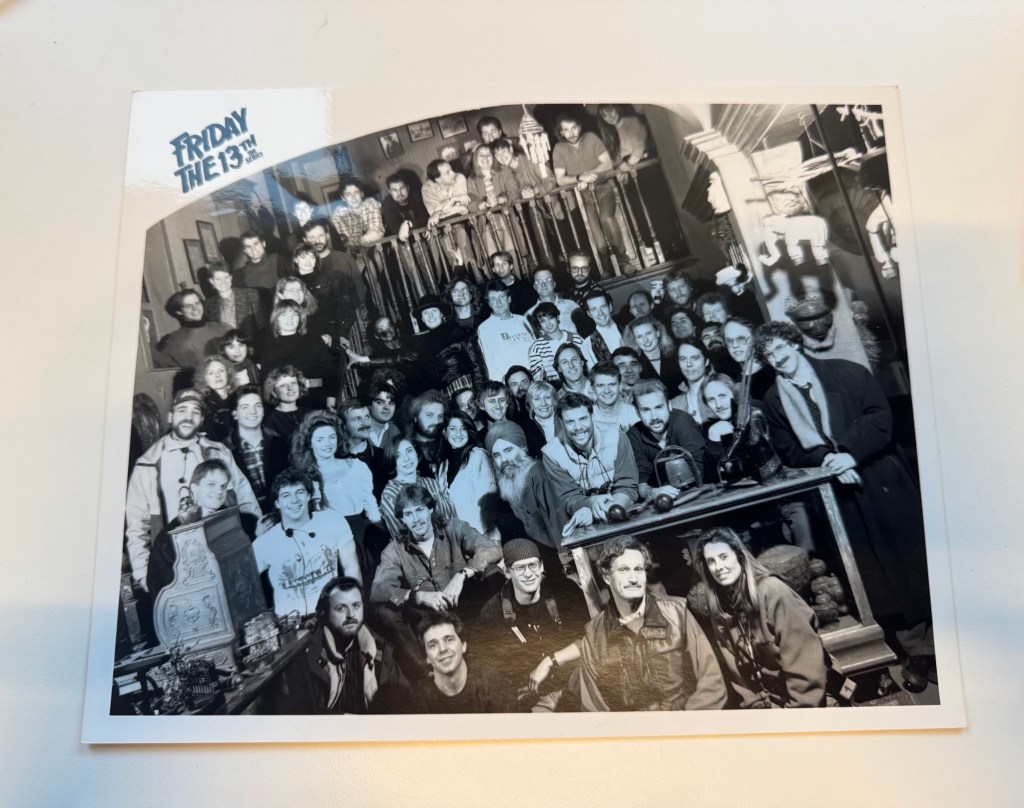
This expansion within the Canadian film industry took place 35 years ago when DGC Ontario had recently become its own District Council within the Directors Guild of Canada. As discussions about regional autonomy unfolded across the country, Ontario Members wanted their own provincial council to better represent local interests.
Executive Director Victoria Harding recalls the dedication of her fellow DGC Members from her early days as an Assistant Location Manager. “We kind of cut our teeth as a jurisdiction on cop shows, horror and zombie movies,” she shares, “but we also hosted some important movies like Searching for Bobby Fischer, Stanley & Iris, and Good Will Hunting. We were all so excited to be a part of the moviemaking universe. We just got it done—almost no request was too crazy.”
“It still felt very much like a cottage industry,” notes Sound Editor Nelson Ferreira. “There was a bunch of smaller format, Canadian work and then a handful of really big movies—the ‘shoot and run’ productions—because they would shoot and leave. It seemed like a two-tiered industry with no ‘middle class’.”
Director and AD Alan Goluboff, who was DGC Ontario Chair for thirteen non-sequential years, felt it too. “There was an attitude, in the eighties and nineties, that we were all a bunch of country bumpkins up here.”
“I think Canadian work was seen as inferior at the time,” acknowledges Director Don McCutcheon of Americans working in Toronto at the time. Still, helming syndicated American shows like Top Cops, Forever Knight, and Kung Fu: The Legend Continues was a bit of a heyday for Toronto Directors. “A lot of people were able to really grow on those productions,” McCutcheon shares, “with bigger budgets and more time to shoot. Americans were shooting on 35mm, while we were still shooting on Super 16— or even 16.”
For Ferreira, the early days felt a bit like film school. “On the bigger productions, a lot of us learned at the feet of some pretty established filmmakers, like John Boorman. Sometimes it was baptism by fire, but you learned how much you had to up your game.”
The ’90s were also marked by a seemingly endless stream of made-for-TV movies. “We called them ‘colon movies’,’” says Harding: “‘Struggling for Sanity: The—— Story.’” They were an unabashedly popular format at that time.
“Sometimes we didn’t even have an AD office,” recalls 1st AD Penny Charter. “We’d plug our five walkies into the back of the camera truck while the camera guys worked out of the front.”
There was just something about 90s culture… “It was a lot more fun,” concedes Charter. “There was a lot less paperwork. Less liability. For better or worse, there was a lot less to worry about. You put up with stuff.” “We were looser,” concurs Production Manager Carmen Arndt. “We kind of brushed off a lot. I think we were all just excited to be part of filmmaking.” For Harding, “It was a real community. Everybody knew everybody.” And there was a ‘work hard, play hard’ mentality. “We’d all stay on set after wrap and socialize,” says Charter. “People don’t do that anymore.”
“We were all still radicals. We were in it because it was the coolest thing to do. We were like a modern-day circus.”
Randi Richmond, Senior VP at NBC Universal
When provincial tax credits were introduced in the mid-’90s, “Everything changed,” says Richmond. “Suddenly, the business went from being all about the art to being a legitimate revenue source.” Toronto was on the verge of becoming a mainstream destination.
“We were doing really good stuff,” acknowledges McCutcheon. “Americans were going, ‘Holy shit, these Directors are really creative, and they meet their schedules.’ I think it was dawning on them that we could handle the work, and that our people were talented enough to deliver a competitive product.”
The pace was different, too. “There always seemed to be more time,” recalls Picture Editor Paul Day. “Five days to shoot a half-hour episode—it was a luxury. And there were 22-episode orders, so you could work steadily then travel between seasons.”
Still, Americans remained attached to their own ADs and Production Designers. The Guild wasn’t having it. “We said, ‘No. We want you to look at our Assistant Directors and our Designers,'” says Goluboff. “And gradually, more and more of us started landing these shows because it became clear that we could do a movie of the week as well as anyone else.”
Then the industry started growing. “Suddenly everybody’s going to film school,” says Richmond. “Everybody is trying to get into the business!” The DGC Ontario office needed to expand, as until then, there were only about four staff members. “We needed a Finance Department, and we needed more Business Agents,” says Goluboff, who recruited Marcus Handman as the DGC Ontario’s first Executive Director. “Marcus really brought serious professionalism into Ontario,” he says.

Coming of Age
By the 2000s, the gap between levels of production had all but closed. “Not only did you have a way higher level of Canadian productions being made and a blossoming of the Canadian industry artistically,” says Ferreira, “but the US indie films started making their way here.” In 2002 alone, Toronto’s film and television industry contributed $1.16 billion to the city’s economy.
The early aughts also saw the formation of Film Ontario. “It was the Locations Caucus who had the vision to tell the Guild we needed to have lobbying at the municipal and provincial levels, and we needed stable and predictable film credits,” says Ron Haney, who had been appointed as the new Executive Director. “They said, ‘We’re going to brand Ontario as a centre of excellence with spectacular people in front of the camera, behind the camera, content creators, artistic personnel, all the way through to training and promoting the Ontario talent pool.”
It was a brilliant strategy. “Some years we had a hundred productions going on in the summer,” says Arndt. “The early ’90s by comparison didn’t have even a third of the productions at one time.” Location Manager John Rakich echoes this. “The city’s gotten bigger, and so have the expectations. In the height of summer, there could be 19 productions all vying for the same square footage.”
“Our infrastructure became so advanced that we were considered among the top three or four jurisdictions for a production base. Toronto has the dollar, probably the most secure and competitive tax credit in the world, crews, equipment—it’s all here.”
DGC Ontario Member and Executive Producer Frank Siracusa
It was an exceptional time to be a Picture Editor, says Day. “I met Post Supervisors like Rachel Sutherland and Gary Mueller, who just had show after show after show. Rachel also did Rookie Blue, and as a Picture Editor, I just checkerboarded between seasons.”
Director Michael Kennedy says most Members don’t realize how much Haney and other Senior Business Agents fought for them. “They’d go to LA and make deals to get Producers and studios to bring a whole series to Toronto and encourage them to hire Canadian Directors,” he says. “There wouldn’t even be series here for them to work on if we hadn’t pushed these deals through with the weight of the Guild.”
McCutcheon agrees that DGC Ontario works hard for its Members. “If you look at a Director’s contract from the eighties and compare it to now, the gains are huge.” Wins have been felt across all departments, says Ferreira. “Massive, massive changes were made for Sound Editors. And the elevation of our profile within the Guild, I think, opened others’ eyes to what we do and how integral Sound is to the finished product.”
Meanwhile, for Members like Arndt, who cut their teeth on non-union shows, the Guild’s benefits are something she never takes for granted. “I’m proud to have health care, dental, protections, and a minimum rate,” she says. “Thirty years ago, freelancers didn’t even understand the importance of RRSPs or health insurance,” recalls Richmond. “I think young people are much more aware now. They come into DGC Ontario and know it’s there to support them.”
“The construction of Pinewood Studios in 2008 marked a turning point. “There became a legitimacy,” says McCutcheon. “The fact that we had an actual purpose-built studio sent a message of permanency and commitment. We weren’t just running around finding empty spaces anymore.”
“Our infrastructure became so advanced that we were considered among the top three or four jurisdictions for a production base,” says DGC Ontario Member and Executive Producer Frank Siracusa, whose Whizbang Productions co-produces behemoth shows like The Handmaid’s Tale and Star Trek: Discovery. “Toronto has the dollar, probably the most secure and competitive tax credit in the world, crews, equipment—it’s all here.”
Richmond agrees. “The crew depth now is mind-boggling,” she says. “To be able to have 40 shows going and still only need to bring in three or four people? I think the only other place you get that is maybe New York.” When CBS asked Siracusa, “Where in the world should we produce Star Trek, the series?” giving him five criteria, “they very quickly decided that, hands down, Toronto was the place to go.”
But while opportunities for DGC crews—especially Key Creatives—expanded significantly during this period, opportunities for Canadian Directors were not keeping pace. For Directors like McCutcheon, switching to Canadian content was a lifeline. “I ended up doing 19 episodes of Murdoch Mysteries—that show has helped support me financially over the years,” he says. “They’re shooting season 19 now—that’s how vital the Canadian industry is.” Meanwhile, Kennedy, who has directed iconic Canadian series like Kids in the Hall, Made in Canada, and Little Mosque, has always preferred Canadian shows. “I really love telling our stories, with our people, and I’d like the money to stay as much as possible in this country so it can support other productions.”
Director and DGC National President Warren Sonoda agrees, having logged many hours in children’s TV, much of it on notable Canadian shows like Odd Squad, Dino Dana, and Jane. “It was a great way to start in television, because you really learn about storytelling, working with a young cast, and getting your days,” he shares. “And then slowly but surely, those opportunities evolved into one-hour and other half-hour comedies.” Sonoda credits DGC Ontario for giving him entree into the television industry through in-person gatherings and panels. “As a young DGC Member, it connected me to a whole group of amazingly creative people, who are my friends and colleagues to this day.”
Still, Siracusa would like to see more opportunities for Canadian Directors. “DGC Ontario is a cornerstone in Toronto. They’re important. I just wish broadcasters would give our Directors a little more latitude to be directing here.”

Weathering the Storms
The resilience of DGC Ontario Members has been tested on more than one occasion, from the recent strikes involving the Writers’ Guild of America and SAG-AFTRA members, to the SARS outbreak of 2003, to a worldwide pandemic—events, says Goluboff, that, for Members, “really drove home the fragility of the industry.’
Indeed, the years between 2020 to 2025 seem to have brought unprecedented challenges to the industry and its Members, starting with COVID-19. Del Toro’s Nightmare Alley was the first production to go dark. “They came in and gave a little speech,” says Charter: “‘We’re gonna shut down for a week, two weeks and see how it goes.’” When reality set in, DGC Ontario pivoted quickly. “That’s where relationships in this business paid off,” says Senior Business Agent Cynthia Clayton. “IA and NABET, for instance —who are competitors because they represent many of the same job categories—set that aside to collaborate. We all worked together –unions, producers, actors, everyone came together and put boots on the ground to get the industry back on its feet.”
The relationships between the unions in the province were strengthened during that period—a point of pride for Harding. “We met every single Friday afternoon, no matter what, to talk about ‘where are we,’ ‘what’s working,’ ‘what’s not,’” she says, adding that the group still has an active text thread from that time.
“We started going back in August, shooting in September,” Charter continues. “That was not easy. You had to wear an N95 and a face shield—so tiring. You can’t breathe. It took a toll on the crew’s mental health, too. People got edgier.” “It was a very strange time for many people, which, fortunately, we can look back and say, ‘Hey, we made it’. And ‘Boy, I don’t want to do that again,'” adds Richmond.
The pandemic exposed inequities that sparked social change both globally and within the industry. “The hierarchy of film can lead to mistreatment from people who see themselves as higher than you,” notes Arndt. “I think that’s all toned down since COVID, and I think it’s positive.”
In post-production, the workflow had already been trending toward remote collaboration; COVID simply accelerated the process, says James Porteous, DGC Ontario’s current Post Production Caucus Rep. In many ways, the process is now more efficient. “There used to be this panic about getting 10 of us in a room together to approve something,” says Ferreira. “And suddenly, it was as simple as, ‘We’ll send you a link,’ and they listen to it and give us notes.’” Porteous agrees. “We started thinking about flow between various groups: locations, talent, and post. Everybody became Zoom literate.”
Production Designer Tamara Deverell notes that COVID also changed how her team functions, especially parents who had a taste of working from home and wanted to maintain that flexibility. For Guillermo del Toro’s upcoming Frankenstein, half of Deverell’s crew—many of whom are mothers—worked remotely. “They’re like, ‘Can I work for you—but can I work from this block of time, and then in the evenings?’ And I’m like, ‘You know what you’re doing. I trust you.” The Emmy-winning and Oscar-nominated Deverell spent years balancing parenting and work herself, often opting for smaller projects over large ones so she could be home in time for dinner. “That was my personal choice to have time with family.”
“I’m proud of the way we’ve adapted and survived over the past five years, and I’m very proud to be the first Executive Director who has worked the floor. This is the accomplishment of my life.”
DGC Ontario Executive Director Victoria Harding
DGC ONTARIO TODAY
In 2020 and 2021, DGC Ontario ushered in a new era after the Membership elected its first female Chair, Director Annie Bradley, and appointed its inaugural female Executive Director, Victoria Harding. “We have very different skill sets,” Bradley shares, of the partnership. “But we complement each other and we’re a formidable team.” She quickly adds that none of this would be possible without the “extraordinary” Executive Board, comprised of 14 elected members who have been “steadfast in their contributions.”
Cultural shifts have occurred at the Guild under the leadership of Harding and Bradley, starting with various initiatives and opportunities in Professional Training and Development. Although a big believer in saying “yes” to as many job opportunities as possible, Bradley states that at some point, Members need proper training “so they’re ready for success when the opportunity arises.” In fact, “setting people up for success” is one of DGC Ontario’s principal mandates, as shown by the 176 courses offered in 2024 alone.
For Deverell, DGC Ontario leadership is better than it’s ever been. “I think they’re rocking it now, with Victoria and Annie.” Sonoda agrees there’s been a paradigm shift since Bradley became DGC Ontario’s first female Chair. Since Bradley became Chair, the DGC Ontario Green Committee (formerly known as the Sustainability Committee) and the DEI Committee have been established—a reflection of the shifting priorities of the Membership and the industry. “Equity has always been huge for me,” Bradley shares, recalling the significant gender imbalance that existed when she first joined the Directors’ Caucus. “Nobody wanted female Directors back then—let’s just be blunt about it.” She’s been encouraged by the growing number of women running for and being elected to Board positions, with DGC Ontario’s Executive Board achieving and maintaining gender equity since 2019.
The Wider Lens, a content platform created by DGC Ontario to celebrate the incredible talent within the Membership, was initiated on Bradley’s watch and garnered 60,000 visits in 2024. She’s also the host of the eponymous podcast series. “Many studio heads and international decision makers read the Wider Lens newsletter,” says Bradley.
In addition to Bradley and Harding assuming the top roles, DGC Ontario has also settled into a new home. In the midst of the pandemic, the DGC Ontario and National staff left 111 Peter Street and relocated to brand-new offices at 65 Heward Street. The new headquarters feature state-of-the-art training room facilities, and a stunning ‘Members’ Hub’ where Members can socialize and work.
Before Bradley and Victoria make decisions, they ask themselves how it will affect Members— whether in terms of job opportunities, skill development, hireability, or overall mental health. “Those are the kinds of questions we run through together every single time we make a decision,” says Bradley.
“I’m proud of the way we’ve adapted and survived over the past five years,” Harding shares, “and I’m very proud to be the first Executive Director who has worked the floor. This is the accomplishment of my life.” “Having someone who understands our needs because she comes from the Membership has been truly amazing,” says PM Member Wanda Chaffey, who joined DGC Ontario in 2000 as a Production Accountant and now functions as the National Executive Board’s Secretary Treasurer.
In fact, hiring staff Members from the industry has been part of Harding’s management strategy. “It elevates comprehension and empathy in terms of the nitty-gritty of set life and the production problems and challenges faced by our Members,” she explains. “Having staff members who fully understand the lingo, pacing, and paperwork gives us a leg up in preventing misunderstandings and misinterpretations regarding workplace issues.”
For her part, Arndt values having women in charge. “Their decision-making is more equitable and fair. There’s less ego.” Meanwhile, in her six years as Caucus Rep, Charter observed increased interest in women’s issues and diversity and inclusion—”topics that had always been on my and other people’s minds,” she shares.
“We have very different skill sets, but we complement each other and we’re a formidable team.”
DGC Ontario Board Chair and Director Annie Bradley, on her partnership with Executive Director Victoria Harding


As DGC Ontario celebrates its 35th anniversary, the industry’s economic impact in Ontario is undeniable. In 2022 alone, the province hosted 419 productions, injecting $3.15 billion into the economy. “When it comes to commitment and creativity, we don’t take a backseat to anyone now,” says McCutcheon. “We just don’t.” “I think Ontario’s found a very good balance,” adds Goluboff. “We can do the $100 million American shows, and we can do a CBC hit like Schitt’s Creek at the same time.”
The industry has a more international face in 2025. “There’s a lot more moving around globally and telling stories of newcomers that are part of the fabric of being Canadian,” notes Deverell. “And Indigenous stories are being told, which is vital—and women’s stories, lest we forget. Not to sound like an old feminist—but it’s still a struggle.”
For Ferreira, “There’s this wonderful rainbow of movies now—everything from self-financed, micro-budget, Canadian movies and web series, all the way up to the Guillermo del Toro films.” Having worked with del Toro since 1997, Deverell understands why he keeps returning. “He found there was just excellence all around—and that’s our crews. They work hard, and they are top notch.”
Meanwhile, film production continues to expand across the province, including in Hamilton, London, Kingston, Ottawa, North Bay, and Sudbury.

Current DGC National President and Director Warren Sonoda admits he was initially a “crappy guild Member”—”I didn’t go to meetings, I didn’t open emails.” But that changed when he got involved. “At some point, someone tapped me on the shoulder and said, ‘You’re the next Director’s Rep.’ It became very fulfilling. I went in kicking and screaming, being dragged onto the Board, but it became infectious.”
“If you go to a meeting, I think you’re gonna learn something,” agrees McCutcheon, DGC Ontario Chair from 2003 to 2010. “Not just about the organization, but about the industry. There are networking opportunities, and you gradually develop a sense of community.” For Siracusa, the best part of working with the DGC over the years has been its Members. “I grew up with most of them—ADs who are close friends—and I still work with them today.”
Sonoda understands the industry can seem daunting to newcomers. “You walk down the streets and see these white trucks full of gear, full of crew, full of cast, and you wonder, ‘How am I ever gonna become part of that?’ And then slowly over the years you walk down the street, and those trucks become your trucks, and those crew members become your friends, and those cast members become your collaborators, and you’re suddenly a part of something.”
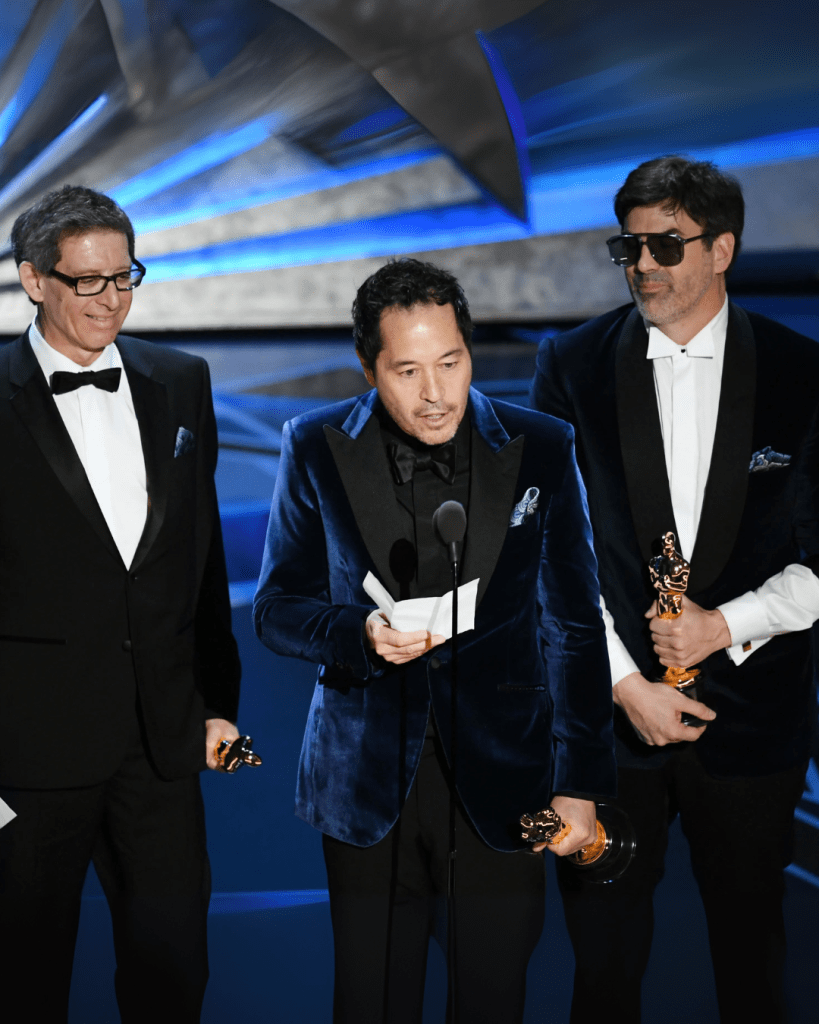
Rakich is encouraged to see Canadians gaining the recognition they deserve. “We’re getting to the point now where 97 percent of the crew is Canadian,” he says. “We’ve created a workforce so skilled that foreign producers don’t have to bring in many people. They can rely on the local talent base.” Still, in a global market, the Guild can’t rest on its laurels, says Siracusa. “As Members, we have to see outside ourselves and constantly be aware of what other regions can offer: rates, availability, crew size, more training, to keep up with demands.”
Meanwhile, new technologies present both opportunities and challenges. “Whenever a new technology enters society, there’s always fear,” observes Porteous. Harding agrees that it’s “scary” and says DGC Ontario is exploring ways to mitigate any resulting attrition. With the world and the industry in a “really weird place,” it’s impossible to predict the future, says Harding.
“Victoria and I always say, ‘We’re just waiting for the pestilence and cane toads to fall from the skies,” quips Bradley. What Harding does see, however, is a “consistency of value in the organization; fundamentally, we exist to make sure our workforce is protected to the best of our ability.” “The people who built the Guild are the foundation on which we stand,” adds Bradley. “Nothing would be possible without the work they did to set us up for success.”
“I think Ontario’s found a very good balance. We can do the $100 million American shows, and we can do a CBC hit like Schitt’s Creek at the same time.”
Director/Assistant Director Alan Goluboff
And that foundation is nothing if not solid. As President and CEO of the CMPA, Reynolds Mastin, states: “Ontario is home to some of the world’s best film and television Directors and crew, largely because of the exceptional work of DGC Ontario in supporting its Members and the industry overall, as well as investing in the next generation of talent. Over the past 35 years, the strong partnership between producers, Directors, and skilled crew has made a significant economic impact and helped position Ontario as a global centre for film and television production.”
From 300 Members to nearly 4,000. From a cottage industry to a global powerhouse, DGC Ontario’s 35-year journey reflects not just growth in numbers but also an evolution in professionalism, advocacy, and community. “We’ve grown into a tight, strong group of artists and craftspeople,” says Ferreira, “and I think we see ourselves that way largely due to DGC Ontario.”


Photos from DGC Ontario’s 35th anniversary party on Saturday, July 12.
To view a gallery of photos from DGC Ontario’s
35th Anniversary Members party at Steam Whistle Brewery on July 12, 2025, click here. Photo credit CL Becker Photography.
Click here to watch the 35-year anniversary archival photo loop featured at the celebration.